Grepr AI is a harness for building proactive operational agents that run on your live telemetry, notice every new or changed pattern the moment it appears, and investigate and fix what no alert, rule, or detection was built to catch.
Seven hard lessons from building a proactive threat-hunter agent on Grepr’s harness, from why the LLM has to be the last line of defense to using causal graphs and deterministic checkers to keep it from inventing kill chains.
Grepr AI maps new log patterns to OCSF, repairs the mapping when a source changes, and tells you exactly what changed, so you never write a parser and your original data stays intact.
How Grepr uses continuous pattern extraction and AI to detect anomalies and build monitoring strategies to prevent failures.
Learn what log aggregation is, how it differs from log management, where cost and noise increase at scale, and how to fix the aggregation point.
Learn what alert fatigue costs engineering teams, what causes it, and how to reduce alert noise before ignored pages turn into costly outages.
Distributed trace support is now GA in Grepr, cutting trace volume 90% with path-based tail sampling while keeping every execution path covered.
Compare 9 top log management tools for 2026. This guide covers open source and paid SaaS options, plus the massive budget killer most guides ignore: log volume.
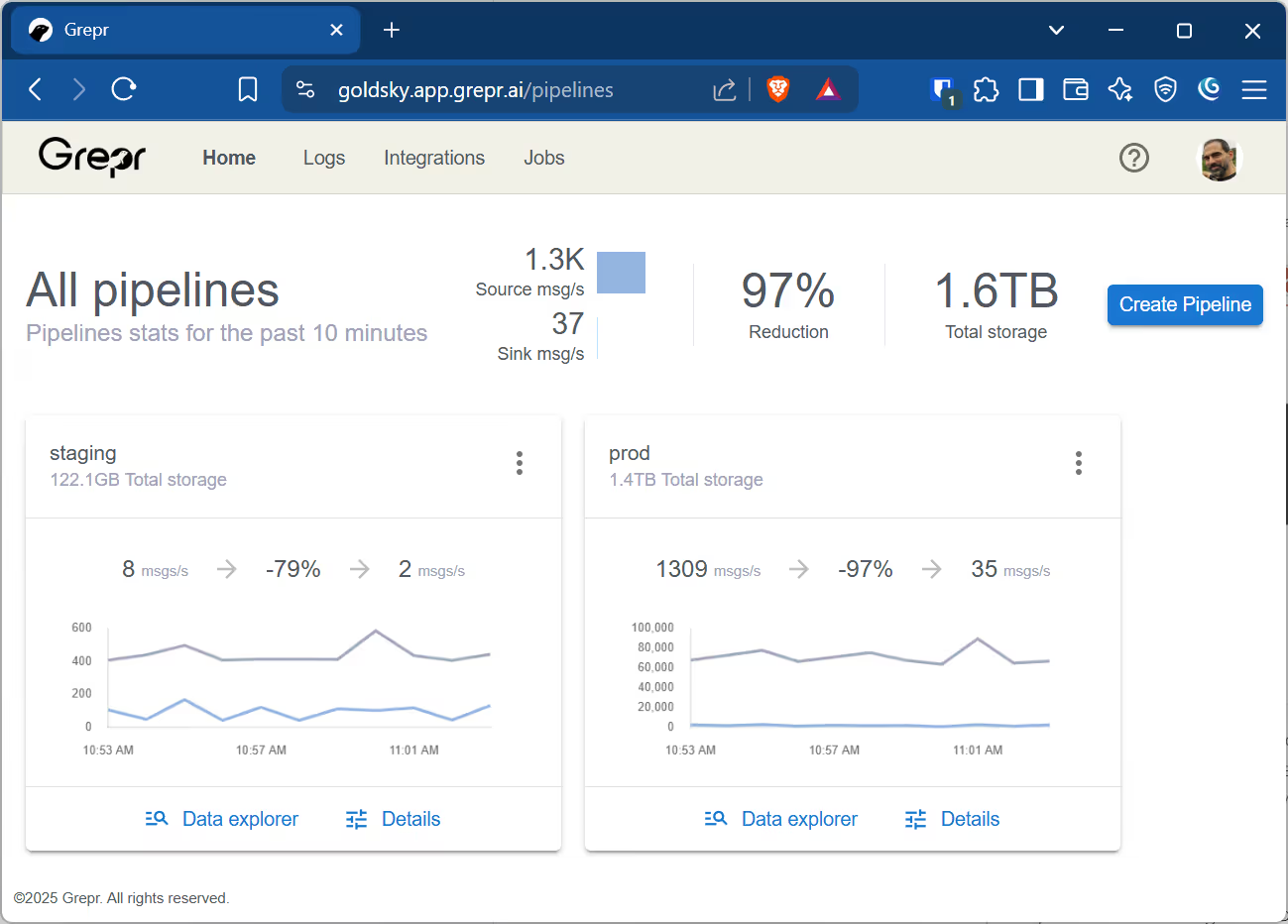
See how Datadog, Splunk, New Relic, and 10 more observability tools compare on cost, query language, and AI support, plus the category most lists skip.