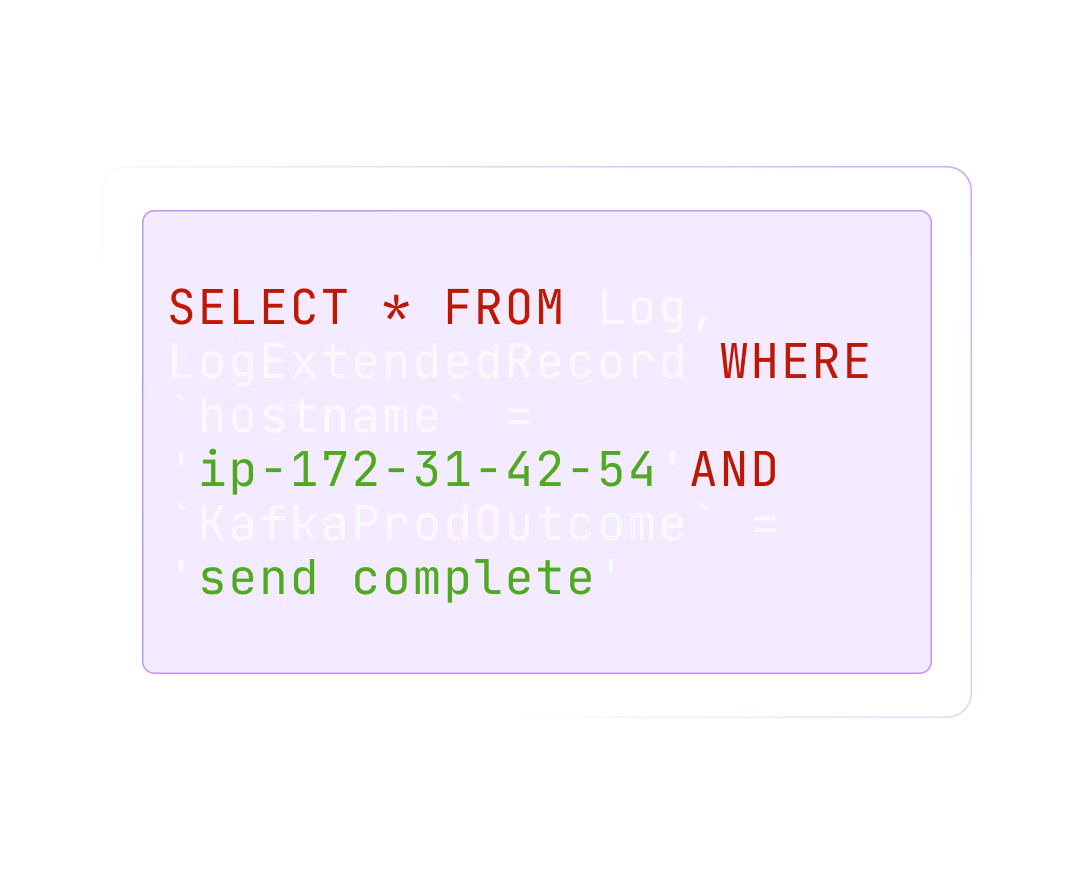
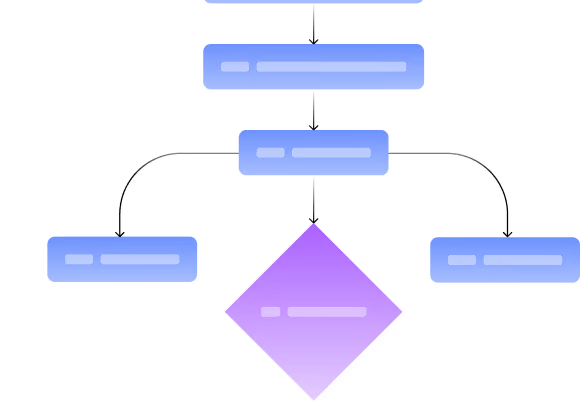
NRDB drop rules

Writing NRQL is confusing.
Requires ongoing maintenance.
Requires ongoing maintenance.

Automatically identifies noisy telemetry signals across all data types without per-rule NRQL authoring.


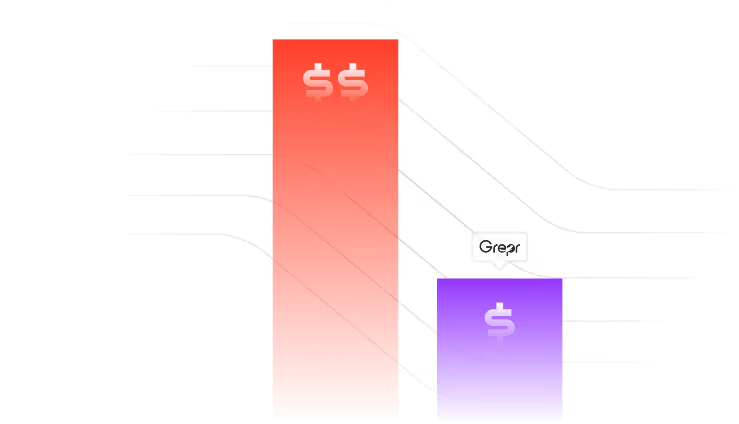
Grepr is the Autonomous Telemetry Pipeline that automatically reduces 90% of your New Relic noise without migrations or disruption to New Relic dashboards and alerts.
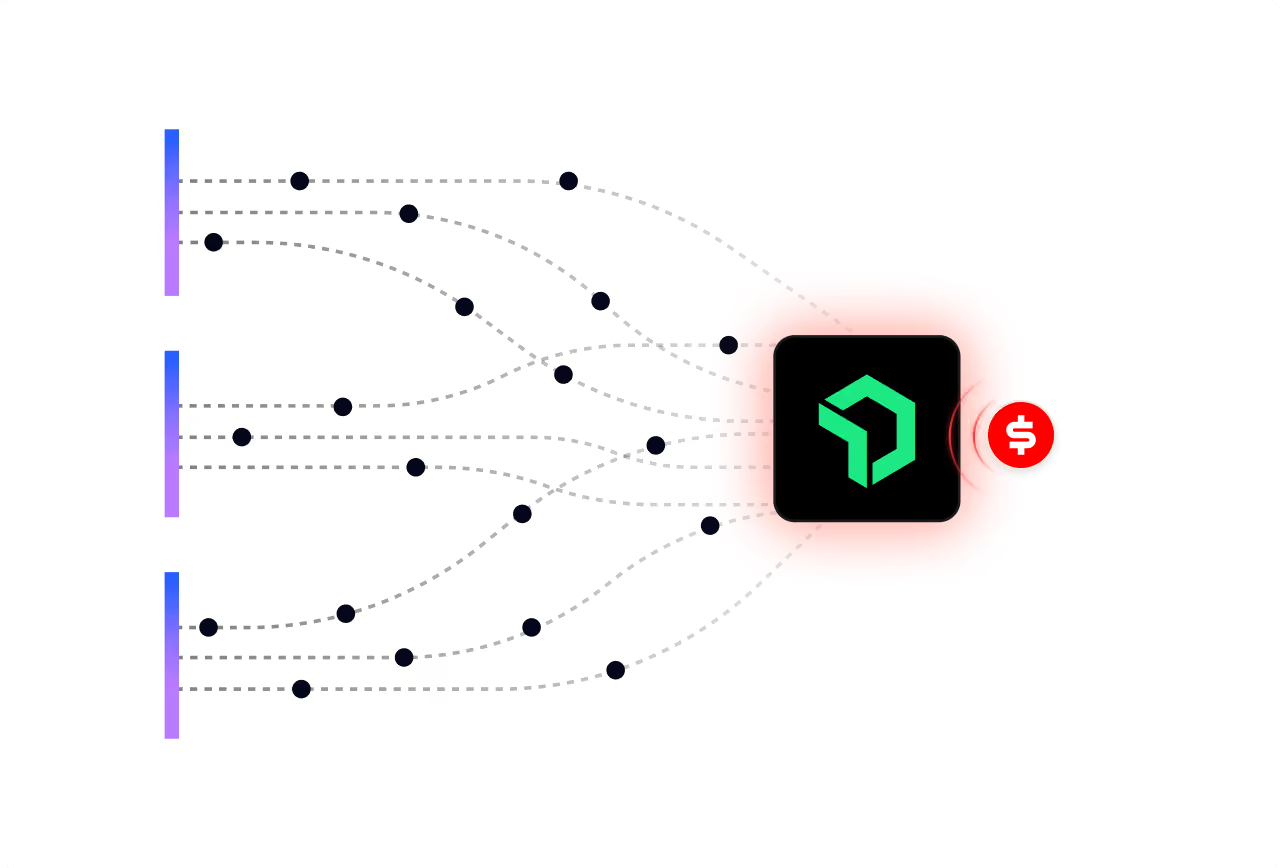
New Relic bills on the data you ingest and the people who need access, and both climb as you scale. Every new service, container, and deploy feeds the stream that gets ingested and counted.
A transparent model does not slow the growth of APM events, repeated logs, and high-cardinality metrics. The pressure builds when low-value repetition grows faster than the signal your team acts on, which is the part a pricing page cannot fix for you.


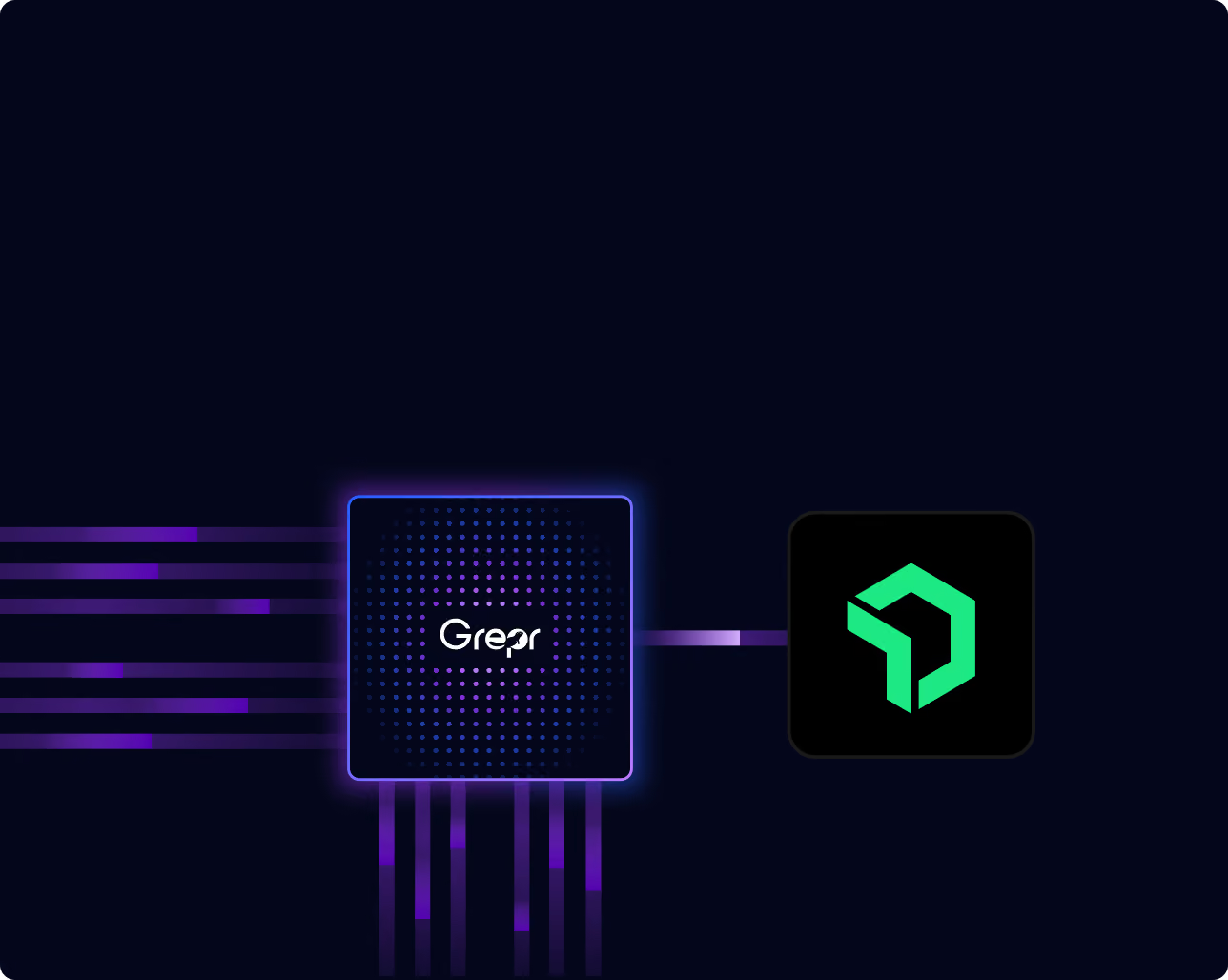
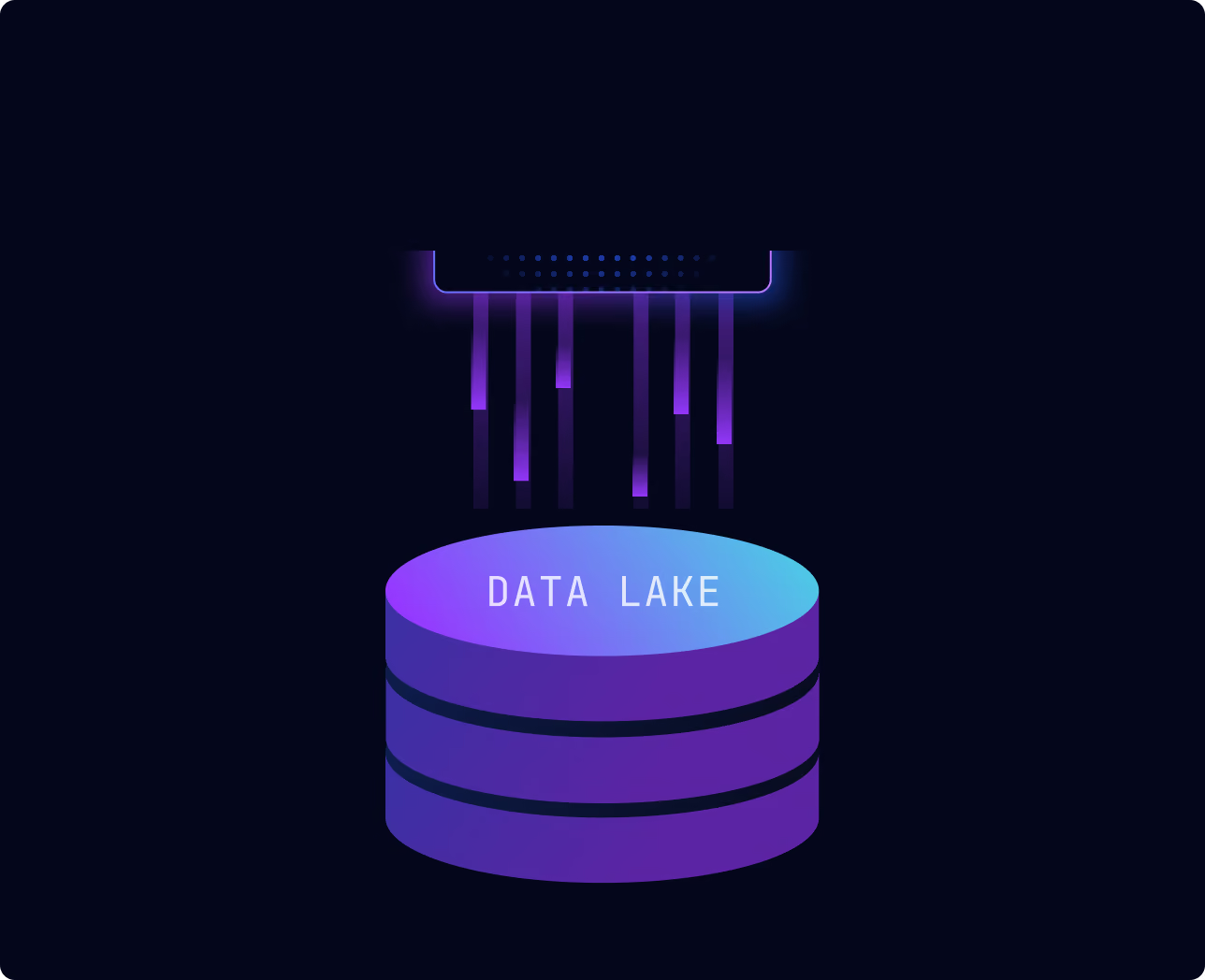
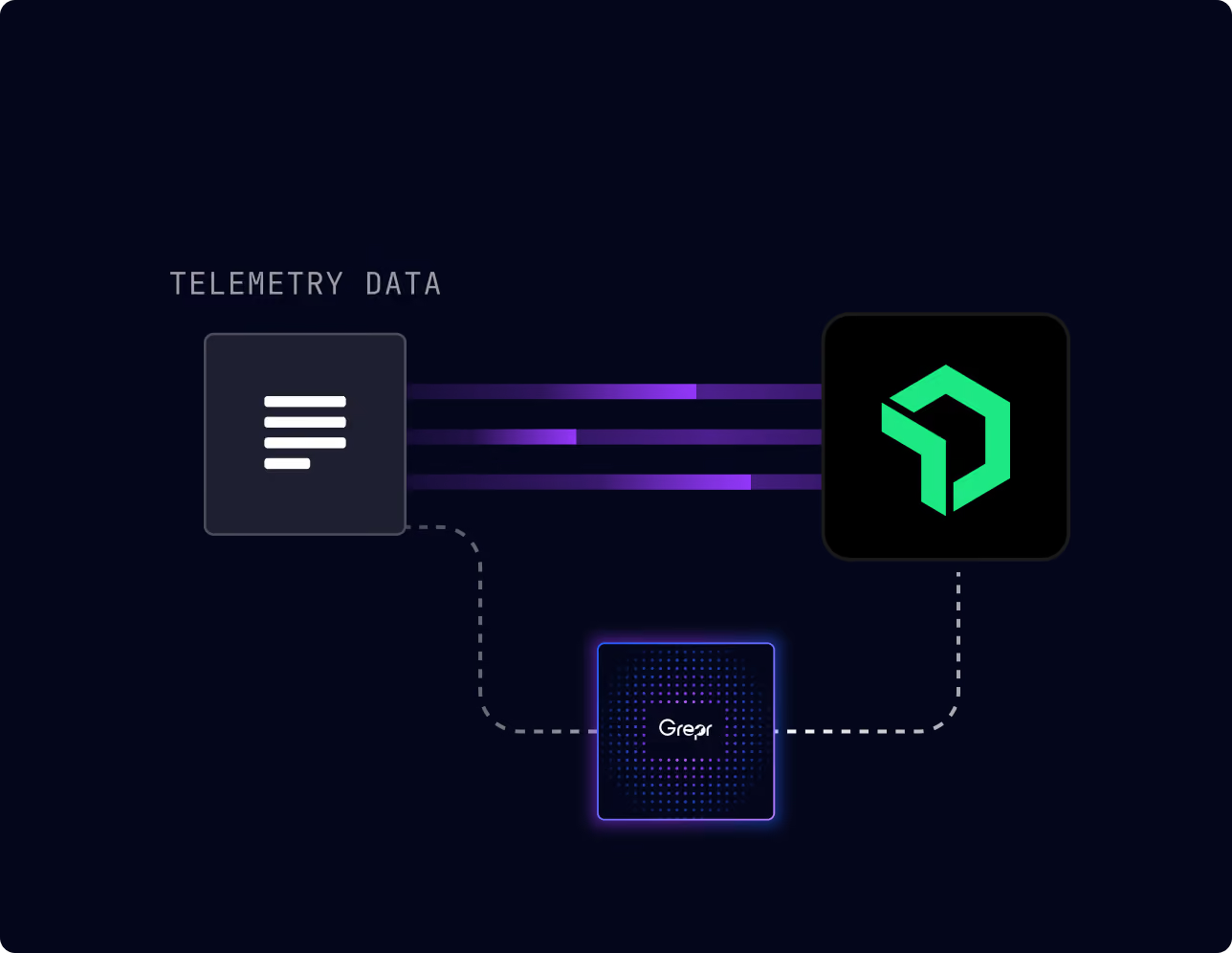
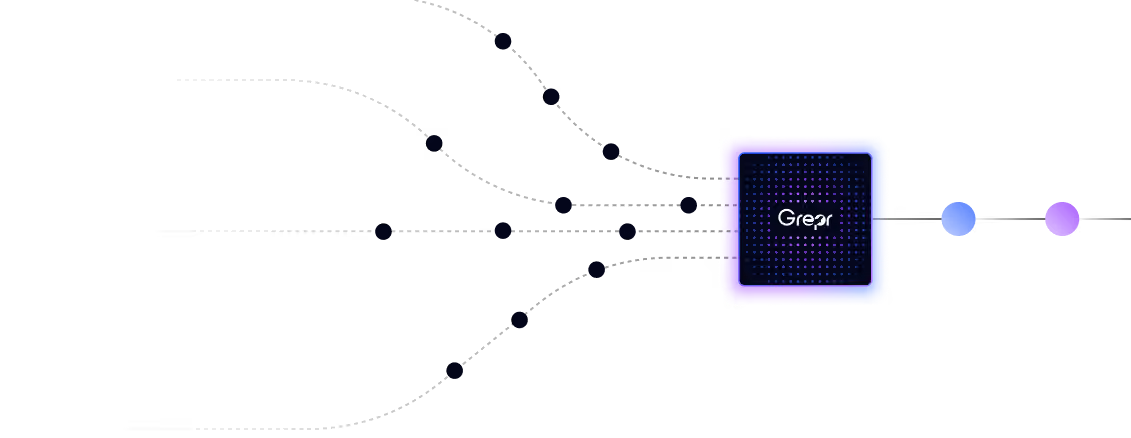
Reduce expensive, noisy telemetry before it’s ingested into New Relic, and preserve raw telemetry in low-cost storage for those rare moments you need it.
Keeps using New Relic as you always have. Your Dashboards, alerts, runbooks, and investigations stay connected to the same workflows.


.avif)
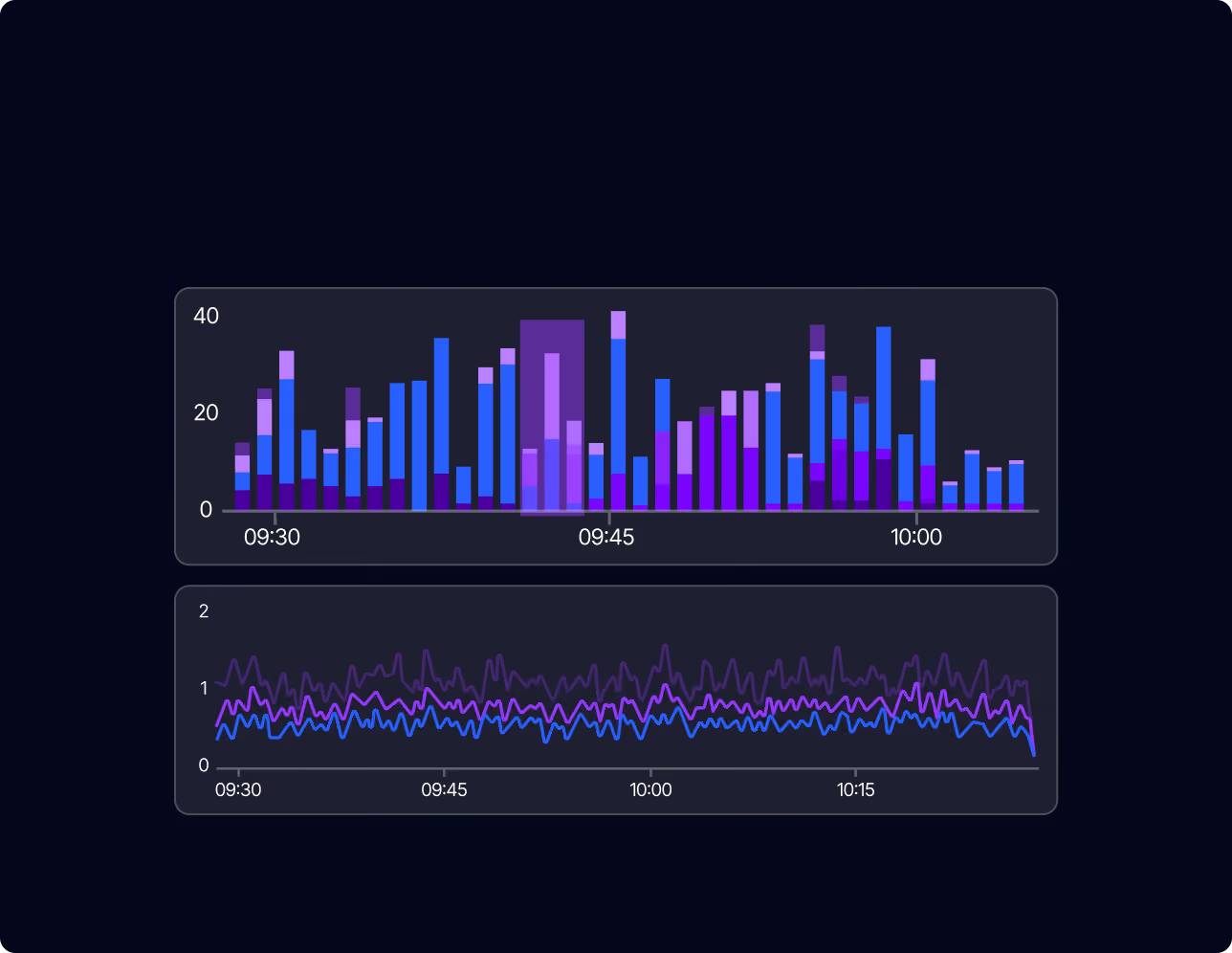
Our signal processing engine automatically eliminates noise. Every two minutes, Grepr sends a summary, such as the qty of repeated patterns with summary statistics.
For example, sending patterns such as request failed for user <*> while preserving configured fields and exceptions.
.avif)
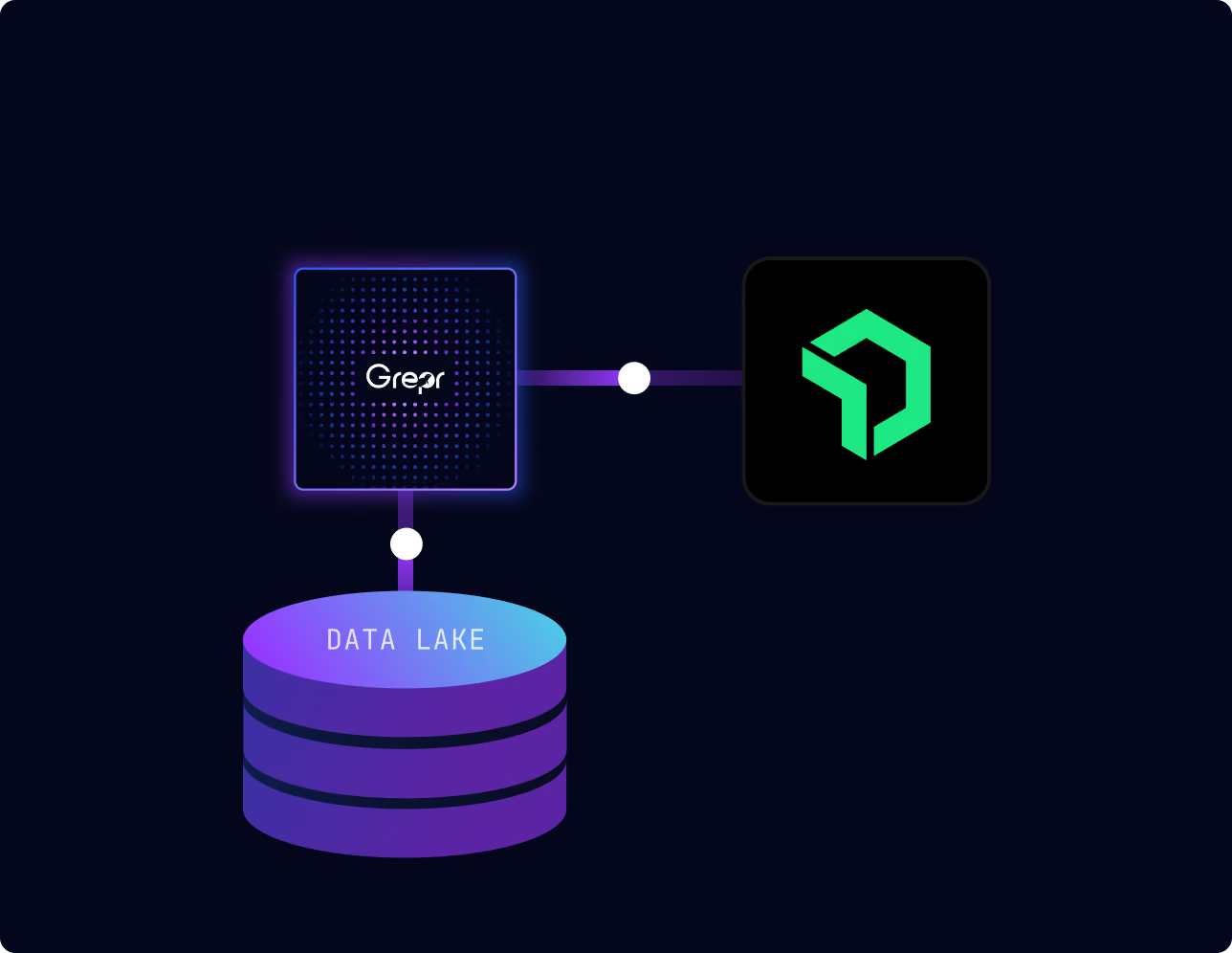
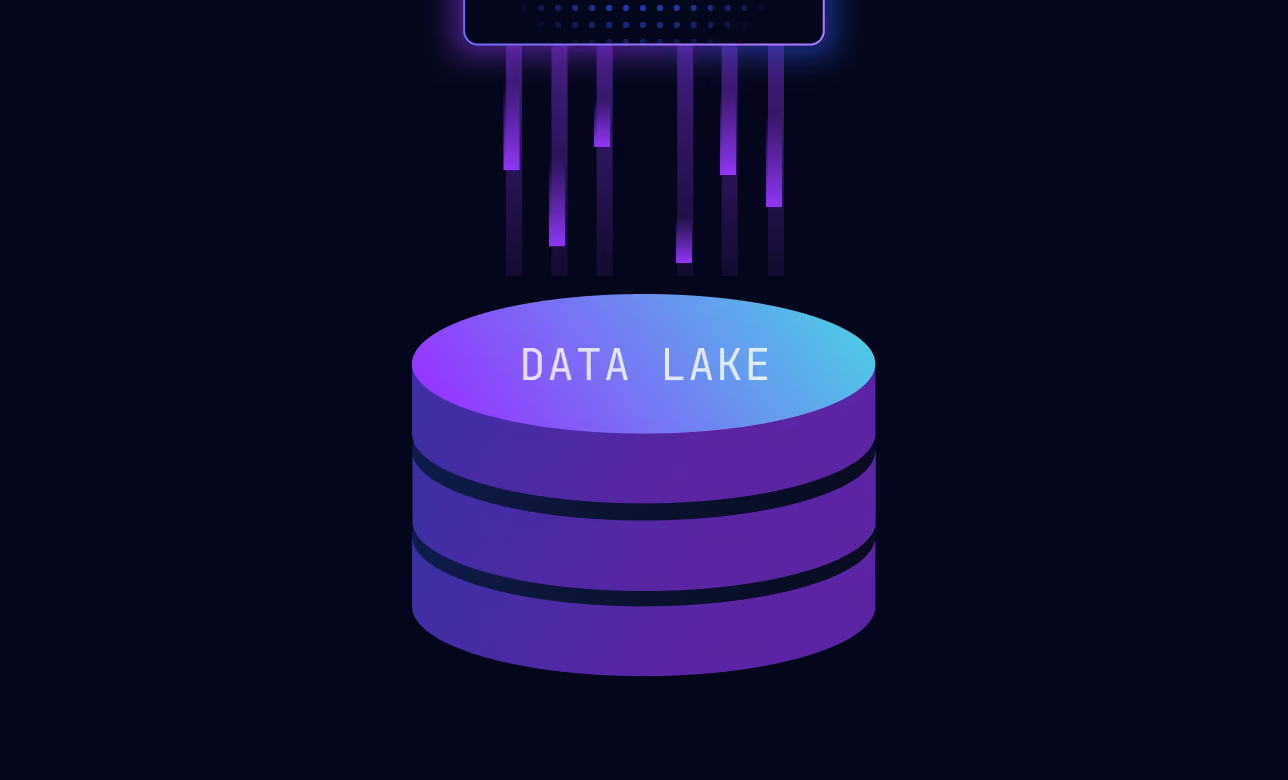
Grepr preserves IDs, IPs, status codes, URL paths, attributes, services, and environments where configured. Raw telemetry remains available in a low-cost data lake.
.avif)
.avif)
.avif)

Grepr is not a New Relic alternative. Keep using New Relic exactly as you always have.
Grepr’s signal processing engine automatically eliminates telemetry noise before it reaches New Relic.
Grepr detects millions of patterns, signatures, and trends dynamically. No toilsome rule-building. No log audits. No routing rules to update each sprint. No policing log volumes.
As you ship more software and produce more telemetry, Grepr scales with you, automatically identifying noisy telemetry in real time.
Reducing telemetry volume only helps if you can still get to the data the moment you need it. New Relic Federated Logs lets you query data stored in Amazon S3 directly from the New Relic UI.
The Grepr UI is still there for building pipelines and managing your signal processing logic. But for day-to-day investigation, your team never has to leave New Relic.
.avif)

“Our developers are happy, because we didn't change how they operate, which is exactly what I wanted. And now our costs have dropped.”

How a Medical Technology Company Reduced Log Volume by 94% While Maintaining Reliability

“I've been through a lot of vendor evaluations, and this was the smoothest POC we've experienced.”


How a Global Retailer Stopped Paying to Index Noise

“We were skeptical that something could reduce our log volume that aggressively without us feeling it somewhere. The fact that our developers haven't noticed a change in how they work is the result we were hoping for.”


How CustomInk Cut Their CloudWatch Bill by 85% Without Impacting Dev or Ops

“After seeing what Grepr did to reduce our logs noise, extending it to traces was an easy call. We were seeing the same pattern: a lot of volume, most of it not particularly useful, and a Datadog billing model that scaled with every new host we spun up.”

How FOSSA Reduced Distributed Trace Volume by 90%

“Engineers didn't change how they work at all. Dashboards and alerts still worked as expected. We just stopped paying for 90% of our log volume that was never doing anything for us.”

9 Days from Kickoff to Production: How Envoy Cut Log Volume by 90%

"Grepr helped us automate what to keep and what to skip, so we’re not paying to store or index noise. It lets us find the needle in the haystack without paying for the haystack!"


How Jitsu Cut Logging Costs by 90% While Managing Millions of Shipments Generating 400 Logs Each
"Since we deployed Grepr, we’re seeing a 95% reduction in log volume and didn’t have to change a thing in our app. I'd recommend Grepr to any team that's experiencing rising costs from an expensive logging platform!"
.webp)

Case Study: How FOSSA Reduced Their Logs by 95% Without Burdening Their Engineers
“Our developers are happy, because we didn't change how they operate, which is exactly what I wanted. And now our costs have dropped.”
“I've been through a lot of vendor evaluations, and this was the smoothest POC we've experienced.”
“We were skeptical that something could reduce our log volume that aggressively without us feeling it somewhere. The fact that our developers haven't noticed a change in how they work is the result we were hoping for.”
“After seeing what Grepr did to reduce our logs noise, extending it to traces was an easy call. We were seeing the same pattern: a lot of volume, most of it not particularly useful, and a Datadog billing model that scaled with every new host we spun up.”
“Engineers didn't change how they work at all. Dashboards and alerts still worked as expected. We just stopped paying for 90% of our log volume that was never doing anything for us.”
"Grepr helped us automate what to keep and what to skip, so we’re not paying to store or index noise. It lets us find the needle in the haystack without paying for the haystack!"
"Since we deployed Grepr, we’re seeing a 95% reduction in log volume and didn’t have to change a thing in our app. I'd recommend Grepr to any team that's experiencing rising costs from an expensive logging platform!"
Typically up to 90%, but it depends on how noisy your telemetry is. Teams running chatty services, health checks, retry loops, debug logs, and repeated lifecycle events tend to have more reducible volume. Jitsu reduced Datadog log costs by 90% with Grepr. Book a demo for an estimate based on your actual environment.
No. Grepr is vendor-neutral and works with New Relic. High-value signal is automatically forwarded to New Relic (or Datadog, Splunk, Grafana Cloud, OpenTelemetry, and common log forwarders).
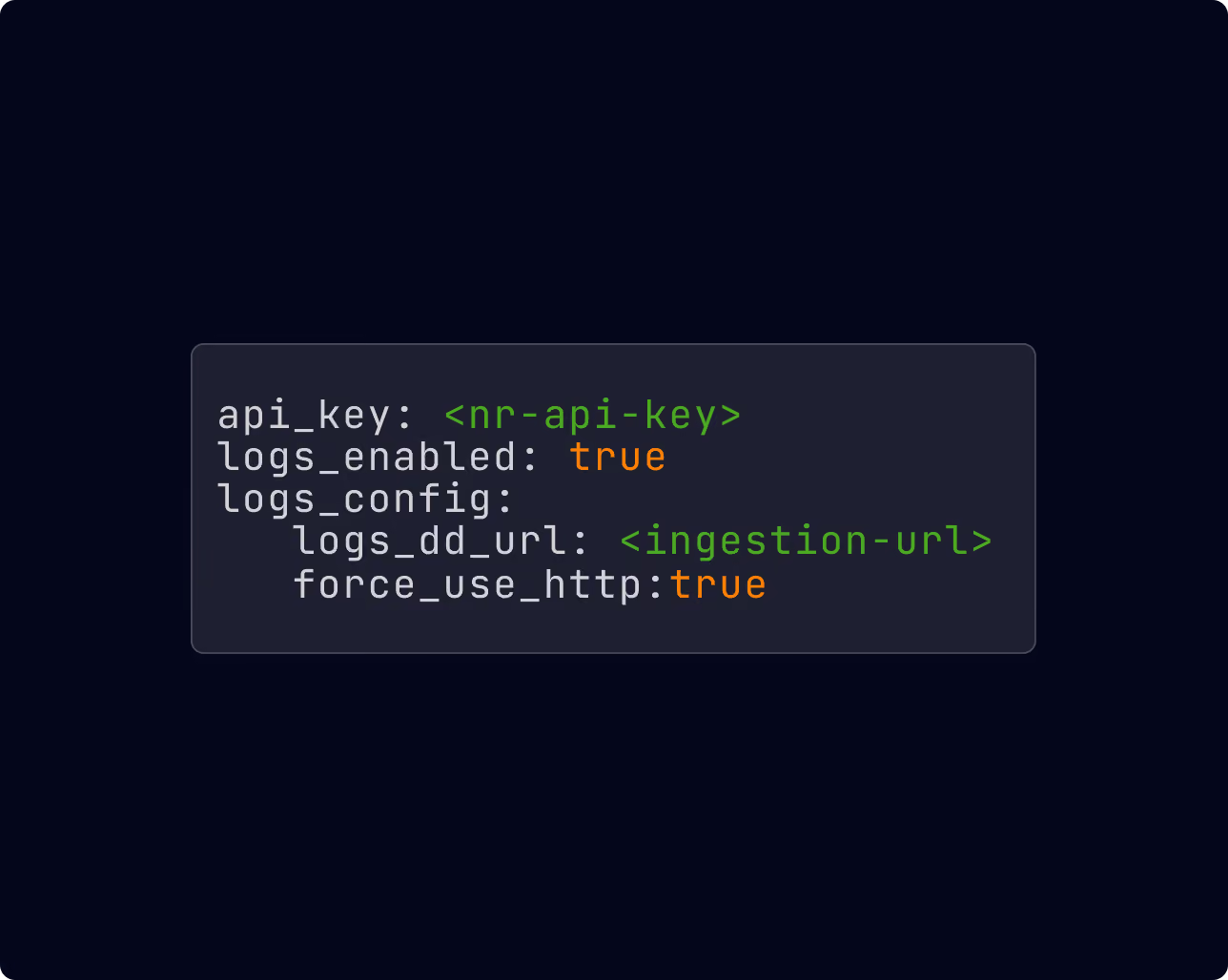
A single configuration change points your New Relic agents to Grepr. No agents to install, no re-instrumentation, and no migrations.
Grepr preserves raw data in low-cost storage for backfill and incident investigation.
Grepr's query translation engine reads your existing dashboards and alerts and automatically ensures the data they depend on is routed through.
No. Sampling usually selects a percentage of events and drops the rest. Instead, Grepr’s signal processing engine detects repetitive, low-value patterns, forwards summaries and high-signal telemetry to New Relic, and preserves raw data in low-cost storage for backfill and incident investigation.
Yes. Grepr also supports distributed tracing, with metrics support anticipated in summer of 2026.
Grepr can manually or automatically backfill data based on triggers such as incidents, anomalies, support tickets, or investigations.
Yes. Grepr sends interesting log patterns to New Relic, and preserves the noisy logs in low-cost storage for backfill and incident investigation.
Grepr can be set up in minutes using a single configuration change that points your existing agents to Grepr. No agents to install, no re-instrumentation, and no migrations.
No. Your New Relic controls stay useful. Grepr adds an upstream layer that changes the volume and shape of telemetry before it reaches New Relic.
Show us your log patterns, trace signatures, and metric trends, and we'll show you how Grepr can reduce your noise.

.avif)