

Reduce SRE toil with better signal
Grepr reduces noisy telemetry by 90%, forwarding signal to your observability tools, so SREs don’t have to slog through noise during incidents.
.avif)
Slogging through noise slows you down
When your pager goes off at 2 am, the last thing you want is to sort through irrelevant, noisy telemetry data.
Repeated logs, debug surges, brittle filters, noisy alerts, and missing context create toil that gets in your way.
The next SRE workflow starts before the alert fires
If the telemetry layer is noisy, brittle, incomplete, or missing raw detail, AI cannot reason well.
AI SRE tools are starting to summarize incidents, correlate alerts, suggest root causes, and recommend fixes. That can help. But every AI-assisted reliability workflow depends on the quality of the telemetry and incident context underneath it.
Grepr eliminates the noise so you can find the signal fast
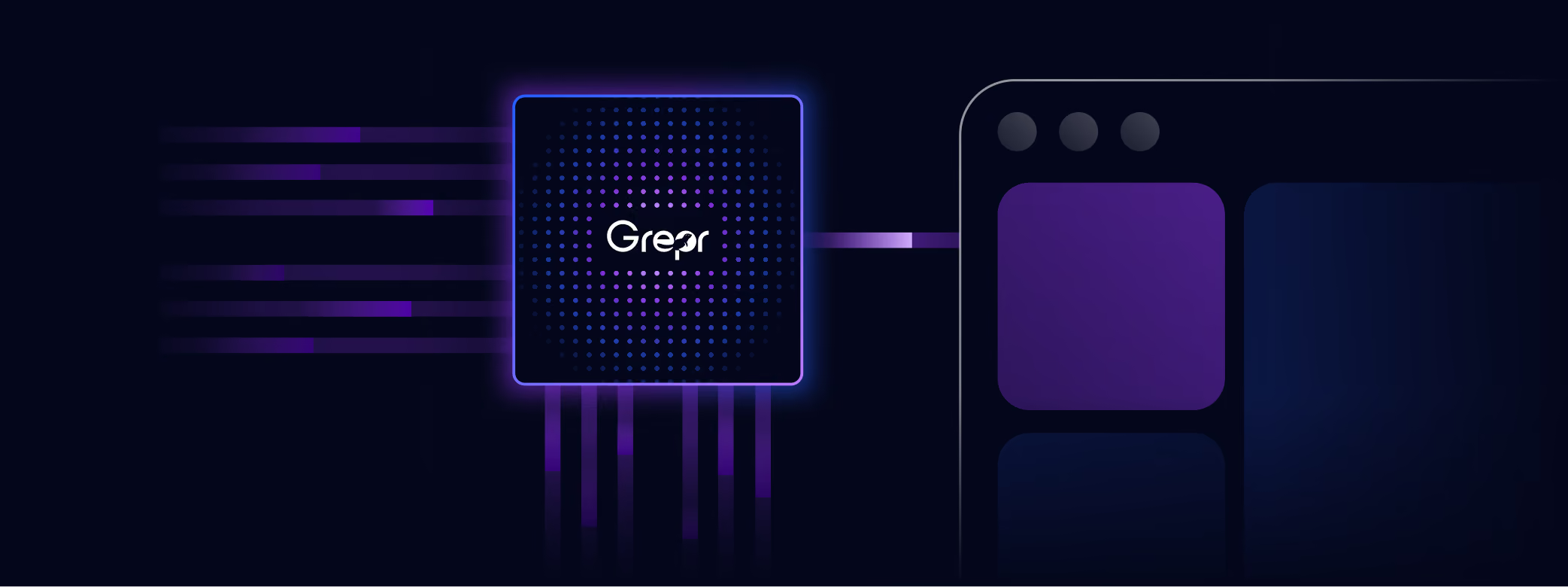
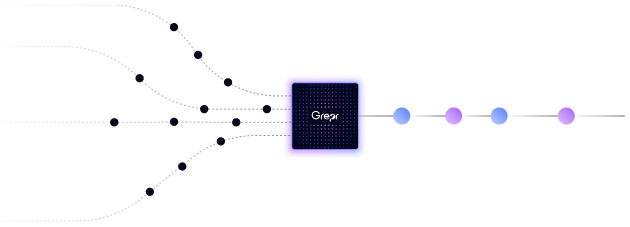
Grepr sits between your observability sources and the observability tools you already use, where it identifies signals in real time, eliminates noisy telemetry, and sends high-value signal to your observability platform.
So you and AI-augmented incident tools can focus on what matters.
Less toil. More reliability.
.avif)
.avif)
.avif)
.avif)
.avif)
.avif)
.avif)
.avif)

Enabling SRE teams
when it matters most
Grepr's signal processing engine automatically eliminates noise and forwards valuable signals, giving SRE teams the right data to troubleshoot faster.
Grepr forwards useful signal and summaries to the tools you already use–keep your dashboards, alerts, and workflows as-is.
Grepr preserves raw telemetry for backfill when an incident, anomaly, support ticket, or investigation needs deeper context.
Grepr increases the signal-noise ratio that supports AI SRE workflows, such as triage, root-cause analysis, and remediation.
Proactive reliability operations

“We were skeptical that something could reduce our log volume that aggressively without us feeling it somewhere. The fact that our developers haven't noticed a change in how they work is the result we were hoping for.”


How CustomInk Cut Their CloudWatch Bill by 85% Without Impacting Dev or Ops

"Grepr helped us automate what to keep and what to skip, so we’re not paying to store or index noise. It lets us find the needle in the haystack without paying for the haystack!"


How Jitsu Cut Logging Costs by 90% While Managing Millions of Shipments Generating 400 Logs Each

"Since we deployed Grepr, we’re seeing a 95% reduction in log volume and didn’t have to change a thing in our app. I'd recommend Grepr to any team that's experiencing rising costs from an expensive logging platform!"
.webp)

Case Study: How FOSSA Reduced Their Logs by 95% Without Burdening Their Engineers

“Engineers didn't change how they work at all. Dashboards and alerts still worked as expected. We just stopped paying for 90% of our log volume that was never doing anything for us.”

9 Days from Kickoff to Production: How Envoy Cut Log Volume by 90%
“After seeing what Grepr did to reduce our logs noise, extending it to traces was an easy call. We were seeing the same pattern: a lot of volume, most of it not particularly useful, and a Datadog billing model that scaled with every new host we spun up.”

How FOSSA Reduced Distributed Trace Volume by 90%
“We were skeptical that something could reduce our log volume that aggressively without us feeling it somewhere. The fact that our developers haven't noticed a change in how they work is the result we were hoping for.”
"Grepr helped us automate what to keep and what to skip, so we’re not paying to store or index noise. It lets us find the needle in the haystack without paying for the haystack!"
"Since we deployed Grepr, we’re seeing a 95% reduction in log volume and didn’t have to change a thing in our app. I'd recommend Grepr to any team that's experiencing rising costs from an expensive logging platform!"
“Engineers didn't change how they work at all. Dashboards and alerts still worked as expected. We just stopped paying for 90% of our log volume that was never doing anything for us.”
“After seeing what Grepr did to reduce our logs noise, extending it to traces was an easy call. We were seeing the same pattern: a lot of volume, most of it not particularly useful, and a Datadog billing model that scaled with every new host we spun up.”
.avif)
FAQ
SRE toil is repetitive operational work that does not create lasting reliability improvement. In observability workflows, it often shows up as alert triage, manual context gathering, noisy telemetry cleanup, brittle filter maintenance, and repeated investigation steps.
Grepr reduces toil by separating repeated telemetry noise from useful signal, preserving raw context, and helping teams backfill detail when incidents need it. That means SRE teams can spend less time managing noisy telemetry by hand and more time improving reliability.
Grepr can help address alert fatigue by eliminating low-value, noisy telemetry and improving the signal-to-noise ratio that reaches your observability back end.
Grepr's query translation engine reads your existing dashboards and alerts and automatically ensures the data they depend on is routed through.
Grepr can be configured to automatically backfill raw telemetry from your data lake into your observability tool during an incident.
No. Grepr makes an SRE’s job easier by eliminating low-value, noisy telemetry so they can analyze valuable signal more quickly when something breaks.
AI SRE refers to the use of artificial intelligence to support reliability workflows such as incident triage, root-cause analysis, alert prioritization, context gathering, and eventual remediation. The strongest AI SRE systems need clean signal, historical context, and reliable telemetry inputs.
Grepr supports the foundation for AI SRE by improving the signal-to-noise ratio upon which these systems rely for their analysis. This can reduce repetitive investigation work today and prepare teams for future AI-assisted reliability workflows.
Yes. Grepr is vendor-neutral and works with the observability vendors and telemetry sources you already use. High-value signal is automatically forwarded to your existing instances of Datadog, Splunk, New Relic, Grafana Cloud, OpenTelemetry, and common log forwarders.
The best way to prepare is to improve your telemetry foundation first: Increase signal by eliminating noisy telemetry as well as arbitrary, manual data dropping that has the potential to throw away valuable insights you may need during an incident.
Move beyond firefighting with AI-ready reliability operations
See how Grepr can reduce telemetry noise, preserve incident context, and help SRE teams prepare for proactive AI-assisted reliability operations.