

Grepr AI
The harness for proactive operational agents.
Build agents that operate on what every other tool misses. Grepr agents find, investigate, explain, and fix what no alert, rule, or detection was built for, across performance, reliability, and security data.
Traditional alerts miss unknown failure modes.
Every alert, SIEM detection, and parser encodes a lesson someone already learned.
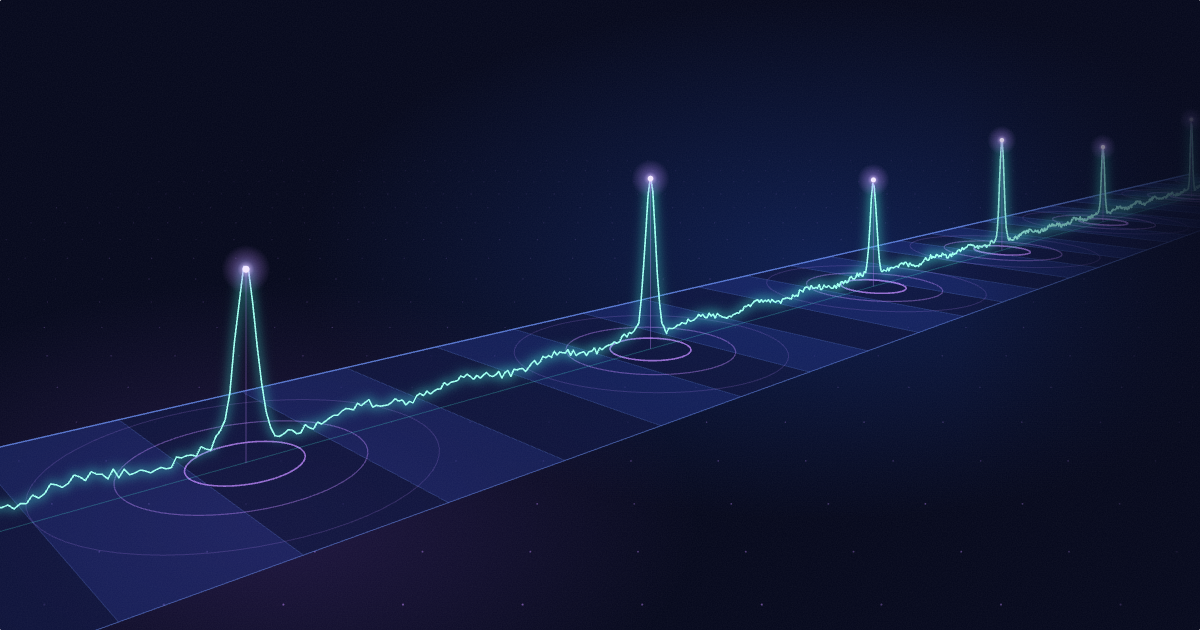
That’s why known problems rarely take you down. The ones that do are new: a dependency failing in a new way, a token landing in an access log, a field renamed upstream. Any tool that waits for a rule to fire can’t see them either.
Something new appears. Your agents get to work.

1. Notice
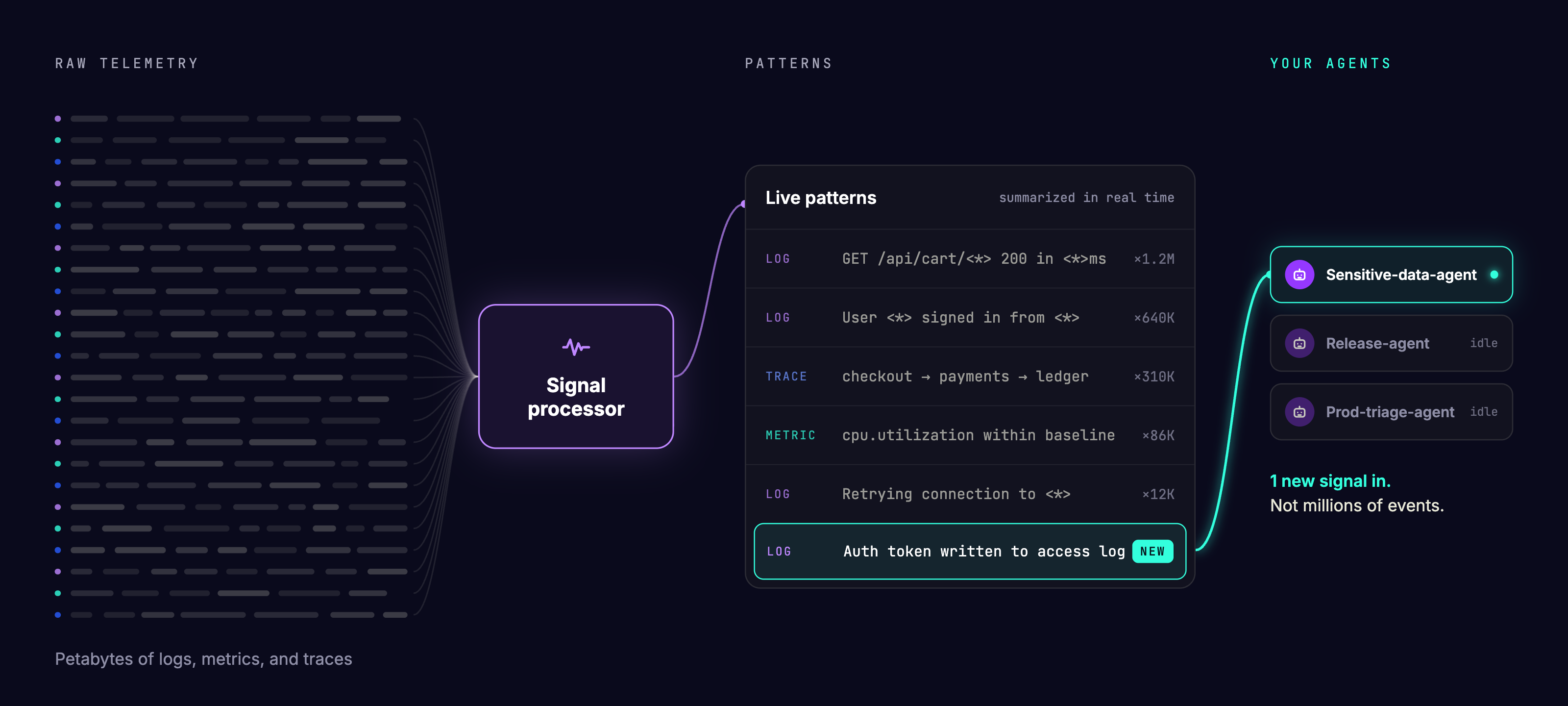
The signal processor fingerprints every log pattern in the stream. When something never seen before appears, or a known pattern changes shape, it becomes a signal.
2. Investigate
Your agent reads the signal in context, checks its memory of similar events, and decides whether it matters. Noise is closed with the reasoning attached, so you can see what was ruled out. Build static rules using SQL to create signals that will fire in the future.
3. Act
When something matters, the agent posts a diagnosis with evidence, opens a fix PR, repairs the pipeline, or runs the workflow you defined. Or it hands the issue to the agent or system you already use.
One harness across reliability, security, and telemetry integrity
The same pipeline and the same agent framework serve platform and security teams, from one deployment.
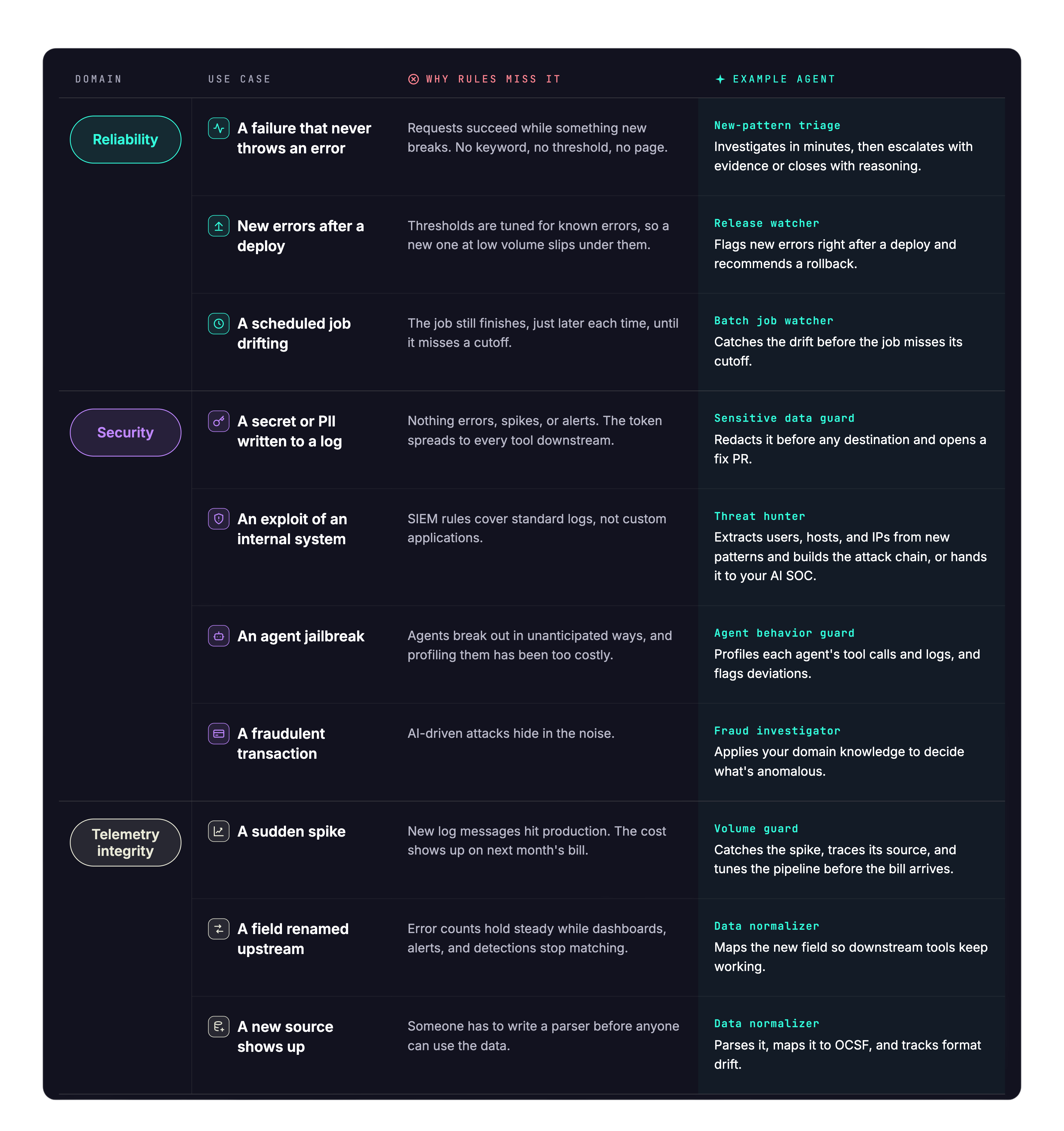
Build an agent for your environment in minutes
Every environment fails in its own way, so Grepr doesn’t hand you a fixed set of agents. You describe the job; Grepr gives the agent the signal, memory, tools, and guardrails to do it.
How it works
Connect the MCP servers your agents should reach.
Create an agent and tell it what to do in plain language: how to investigate signals and how you want to be notified if it finds anything worth flagging.
The agent starts receiving new signals as they appear. Default signals differ by data type, or you can create your own using streaming SQL.
See what agents are working on, and coordinate between humans, Grepr agents, and other agents using MCP.
Connect the agents you already run to the Issues board and data lake through MCP.

Case study: 30 days on call in Grepr’s Prod
We ran Grepr AI 24/7 in our own environment for a month without writing a single alert rule.
The month in numbers
17,000
investigations on our own production logs.
20
issues that needed a human. Grepr AI closed the rest without alerting anyone.
4 to 5 minutes
from first signal to diagnosis in Slack.
What it caught
Reliability
An image that was never pushed to the registry.
Security
One-time auth codes leaking into access logs through the Referer header, with a fix PR opened.
Memory
A recurring thread-pool problem linked to a dozen earlier occurrences, and given an owner that day.
Already running agents?
Give them something new to work on.
Your AI SRE, AI SOC, and coding agents start when something flags a problem. Grepr flags what nothing else does. Connect them to the Issues board through MCP, and they work the issues Grepr finds in collaboration with your Grepr agents.
You set the guardrails
Reasoning you can read
Every investigation records what the agent looked at and why it decided what it did.
Changes you approve
Pipeline changes are dry-run against live traffic, then applied automatically or queued for approval. You choose per agent.
Scoped access
An agent reaches only what its identity, tools, skills, and MCP connections allow.
Your data
Full-fidelity raw telemetry lands in your own storage in open formats.
Agents work on patterns, not petabytes
Agents never read the firehose.
Grepr’s signal processor turns raw telemetry into patterns and only sends interesting signals to your agents, so agent cost tracks novelty, not volume. The same pipeline cuts observability costs 90%.
FAQs
You build them, in minutes, by describing the job in plain language. Starter prompts help you begin, and you can tailor any agent to your environment.
No. AI SREs start when an alert fires. Grepr starts when something changes, across performance, reliability, and security, and it can orchestrate a fix or hand issues to the AI SRE you already run.
Yes. The same deployment serves platform and security teams, including coverage for custom application logs that SIEM rules miss.
In our first month, Grepr AI ran 17,000 investigations and raised 20 issues for a human. Everything else closed with its reasoning attached.
You decide what each agent can do, which actions need approval, and where a human stays in the loop. Every conclusion links back to the evidence.
No, agents don’t ingest the pipeline. Instead, the pipeline collapses raw telemetry into patterns, and only new patterns reach your agents, so agent cost tracks novelty, not volume.
Find out what your telemetry has been trying to tell you
Build your first agent, and see what it catches in your first week.