

Ditch Cribl.
Eliminate toil.
Stop building toilsome, brittle pipeline rules that age the moment a service changes.
Grepr automatically reduces 90% of your telemetry noise. No rules to write, no migrations, and no disruption to existing dashboards and alerts.
Cribl is for manual pipeline control.
Grepr is for autonomous noise reduction.
Cribl may be a fit if:
- You have large teams and processes focused on building and maintaining pipeline logic.
- Your team wants to control sampling decisions around noise reduction.
- Your team already treats telemetry pipeline engineering as an owned platform function.
Grepr may be a fit if:
- You want an autonomous telemetry pipeline that scales to millions of log patterns, trace signatures, and metric trends dynamically, instead of relying on static rules built by engineers.
- You want to collect everything and avoid sampling or arbitrary data dropping, with raw telemetry preserved in low-cost storage.
- You need to give SREs cleaner signal and massive noise reduction for faster incident response.
The side-by-side comparison
Cribl is a legacy telemetry pipeline for teams that only want manual control over telemetry routing and transformation.
Grepr is an autonomous telemetry pipeline, built for the AI era, that delivers 90% noise reduction in minutes.
.svg)



Grepr automates
Cribl's toil
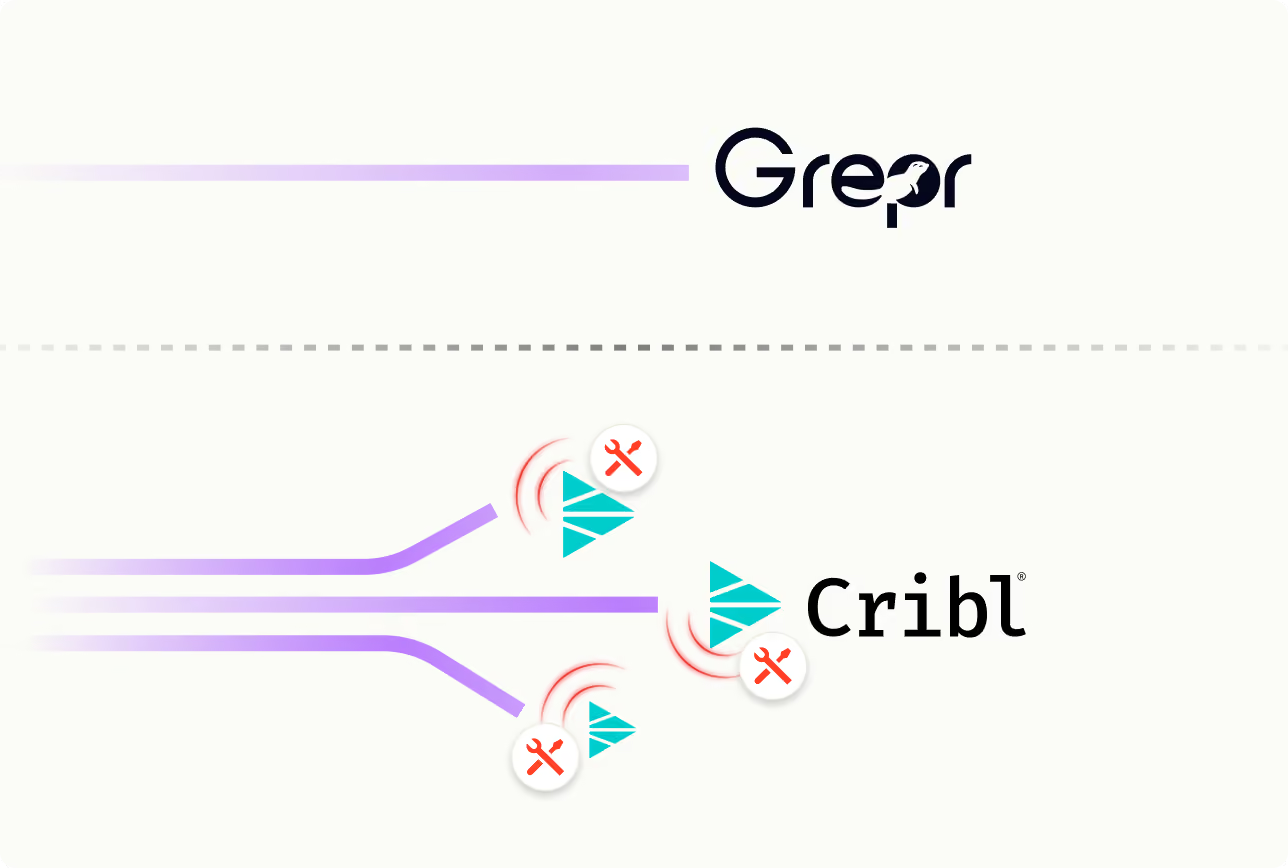
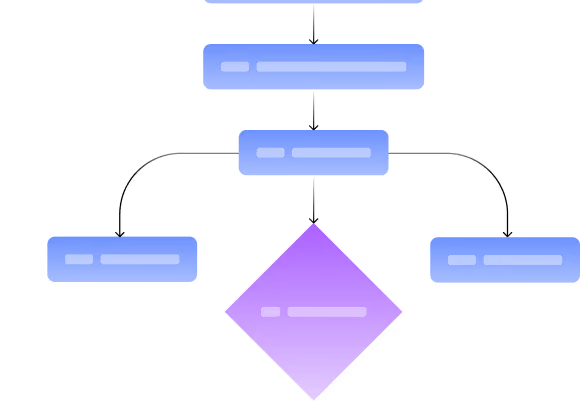
With Cribl, telemetry rules age quickly. New services, releases, log formats, fields, routes, and incident patterns make yesterday's filters obsolete.
Grepr’s signal processing engine automatically detects millions of log patterns, trace signatures, and metric trends dynamically, instead of relying on toilsome, static rules built by engineering.
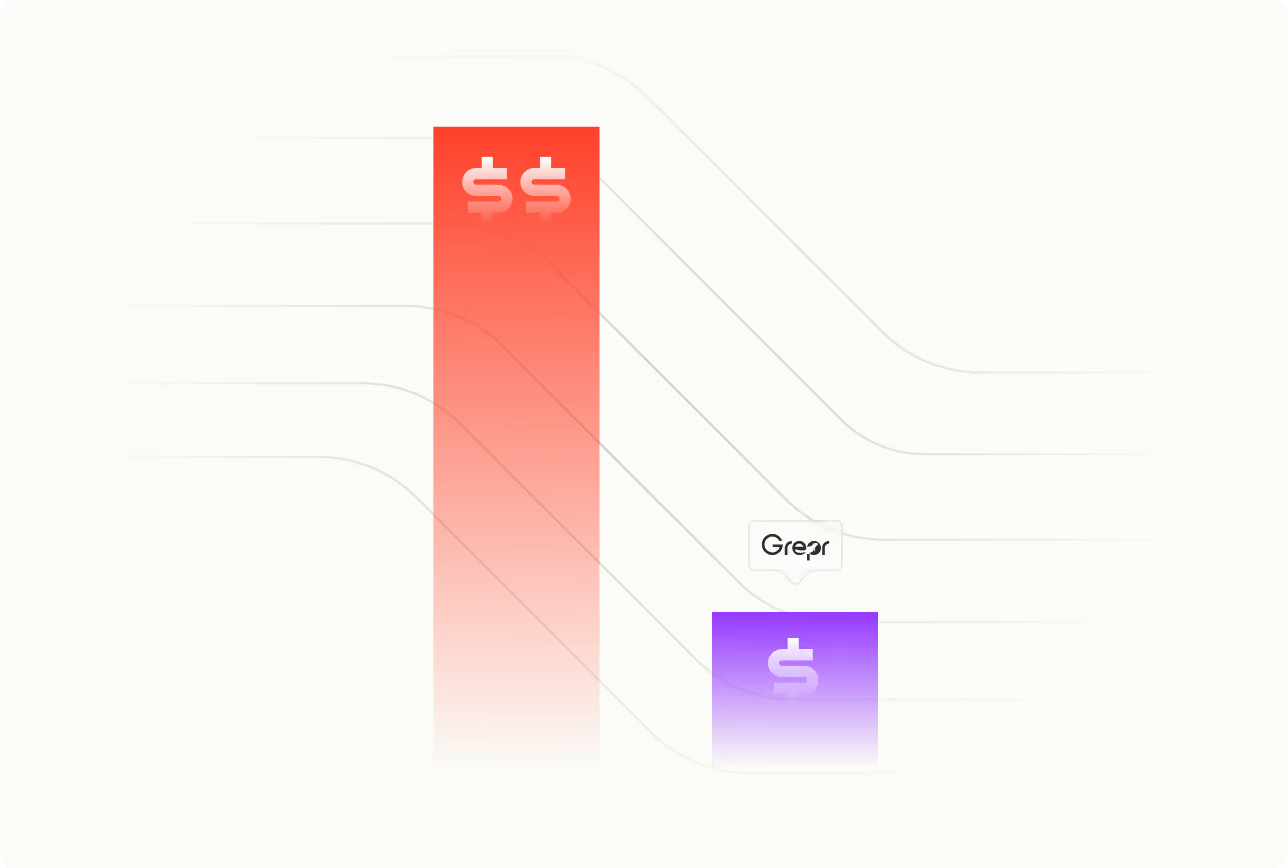
Cut observability TCO by 75% in minutes

Cribl: Requires months of engineering investment, building and maintaining brittle rules.
.svg)
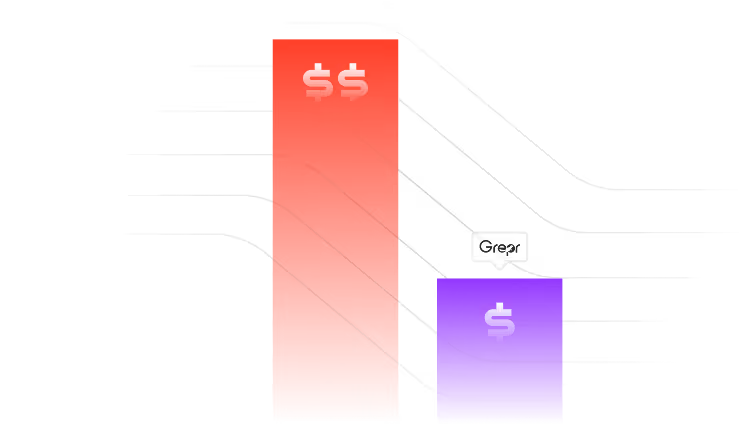
Grepr: A single config change routes noisy telemetry data to low-cost storage, sending compressed signal and summaries to your observability platform. We guarantee a 75% reduction in your observability TCO.
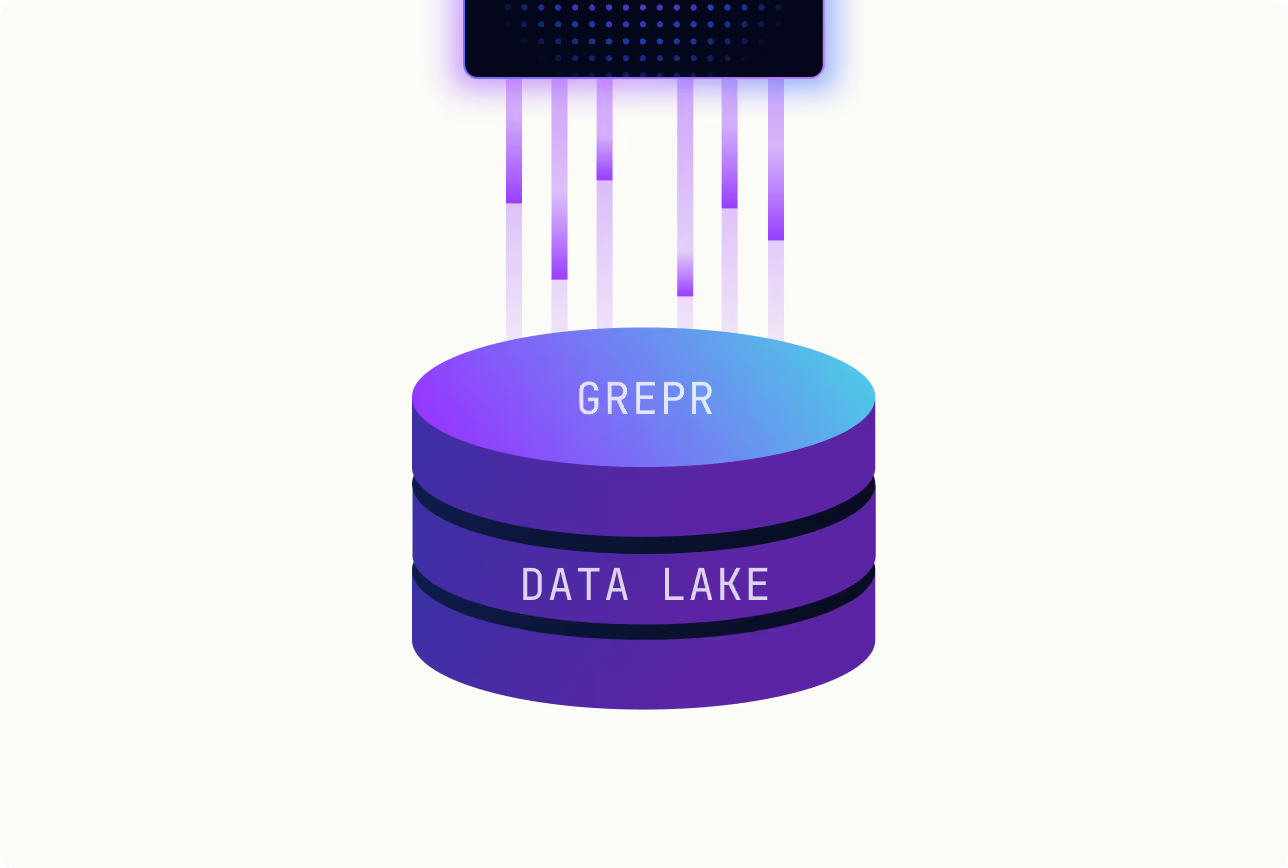
Preserve raw telemetry data for incident analysis
Cribl: Your pipeline rules risk throwing away valuable data that you might need during an incident.
Grepr: Manually or automatically back-fill raw data based on internal or external triggers, such as incidents, anomalies, support tickets, or investigations.
Eliminate noise and toil, automatically

“We were skeptical that something could reduce our log volume that aggressively without us feeling it somewhere. The fact that our developers haven't noticed a change in how they work is the result we were hoping for.”


How CustomInk Cut Their CloudWatch Bill by 85% Without Impacting Dev or Ops

"Grepr helped us automate what to keep and what to skip, so we’re not paying to store or index noise. It lets us find the needle in the haystack without paying for the haystack!"


How Jitsu Cut Logging Costs by 90% While Managing Millions of Shipments Generating 400 Logs Each

"Since we deployed Grepr, we’re seeing a 95% reduction in log volume and didn’t have to change a thing in our app. I'd recommend Grepr to any team that's experiencing rising costs from an expensive logging platform!"
.webp)

Case Study: How FOSSA Reduced Their Logs by 95% Without Burdening Their Engineers

“Engineers didn't change how they work at all. Dashboards and alerts still worked as expected. We just stopped paying for 90% of our log volume that was never doing anything for us.”


9 Days from Kickoff to Production: How Envoy Cut Log Volume by 90%
“After seeing what Grepr did to reduce our logs noise, extending it to traces was an easy call. We were seeing the same pattern: a lot of volume, most of it not particularly useful, and a Datadog billing model that scaled with every new host we spun up.”


How FOSSA Reduced Distributed Trace Volume by 90%
“We were skeptical that something could reduce our log volume that aggressively without us feeling it somewhere. The fact that our developers haven't noticed a change in how they work is the result we were hoping for.”
"Grepr helped us automate what to keep and what to skip, so we’re not paying to store or index noise. It lets us find the needle in the haystack without paying for the haystack!"
"Since we deployed Grepr, we’re seeing a 95% reduction in log volume and didn’t have to change a thing in our app. I'd recommend Grepr to any team that's experiencing rising costs from an expensive logging platform!"
“Engineers didn't change how they work at all. Dashboards and alerts still worked as expected. We just stopped paying for 90% of our log volume that was never doing anything for us.”
“After seeing what Grepr did to reduce our logs noise, extending it to traces was an easy call. We were seeing the same pattern: a lot of volume, most of it not particularly useful, and a Datadog billing model that scaled with every new host we spun up.”


.avif)
FAQ
Cribl is a legacy telemetry pipeline that requires toilsome, manual setup to control how telemetry is collected, shaped, routed, stored, and replayed. Grepr is an autonomous telemetry pipeline that detects millions of log patterns, trace signatures, and metric trends dynamically, instead of relying on static rules, reducing telemetry noise by up to 90% in minutes with one config change. Raw telemetry is preserved in low-cost storage, available for backfill during incidents.
Yes, Grepr is a Cribl alternative for teams that want to reduce noisy telemetry without the need for engineering to spend weeks or months building and maintaining toilsome, manual pipeline rules. Additionally, Grepr’s unique, stateful streaming SQL engine goes beyond simple transformations and handles complex enrichments and real-time analytics in ways that Cribl can’t.
It can for many teams. Some organizations evaluate Grepr instead of Cribl, and others use different telemetry tools for different parts of the architecture.
Traditional pipelines require manual, operator-defined routing, filtering, transformation, and destination logic. Grepr identifies millions of patterns in real time with patented pattern detection, without building or maintaining brittle rules. Grepr is a full-service telemetry pipeline that handles real-time joins, cross-service correlation, and complex format transformations like OCSF and UDM, capabilities that Cribl doesn’t support.
Yes. Grepr reduces observability TCO by 75% in minutes, without weeks or months of building manual pipeline rules. Cribl can reduce cost too, and the savings depend on the rules teams build and maintain.
Yes. Grepr preserves raw telemetry in low-cost storage, available for search, incident context, and automatic backfill during an incident.
Yes. Grepr can manually or automatically backfill data based on triggers such as incidents, anomalies, support tickets, or investigations.
Yes. Grepr's query translation engine reads your existing dashboards and alerts and automatically ensures the data they depend on is routed through.
Grepr is vendor-neutral and works with the observability vendors and telemetry sources you already use. High-value signal is forwarded to your existing instances of Datadog, Splunk, New Relic, Grafana Cloud, OpenTelemetry, and common log forwarders.
Choose Grepr when you want to reduce noisy telemetry by up to 90% within minutes, without engineering spending weeks to months building and maintaining manual rules, and when you want all raw telemetry preserved in low-cost storage for incident backfill.
A team may choose Cribl when it wants to build manual pipelines to specify collection, routing, shaping, enrichment, storage, replay, and destination logic.
See why teams choose Grepr for automatic telemetry noise reduction.
See how Grepr reduces telemetry noise by 90% in minutes, preserves raw telemetry in a low-cost data lake, and lowers observability TCO by 75%, without forcing a migration or creating a rule-maintenance backlog.