

Reduce observability TCO 75% without reducing reliability
Grepr helps engineering and platform teams reduce noisy telemetry data before it’s sent to your expensive observability platform.
Keep the observability tools you already uses, preserve raw data, and stop paying full price for noise.
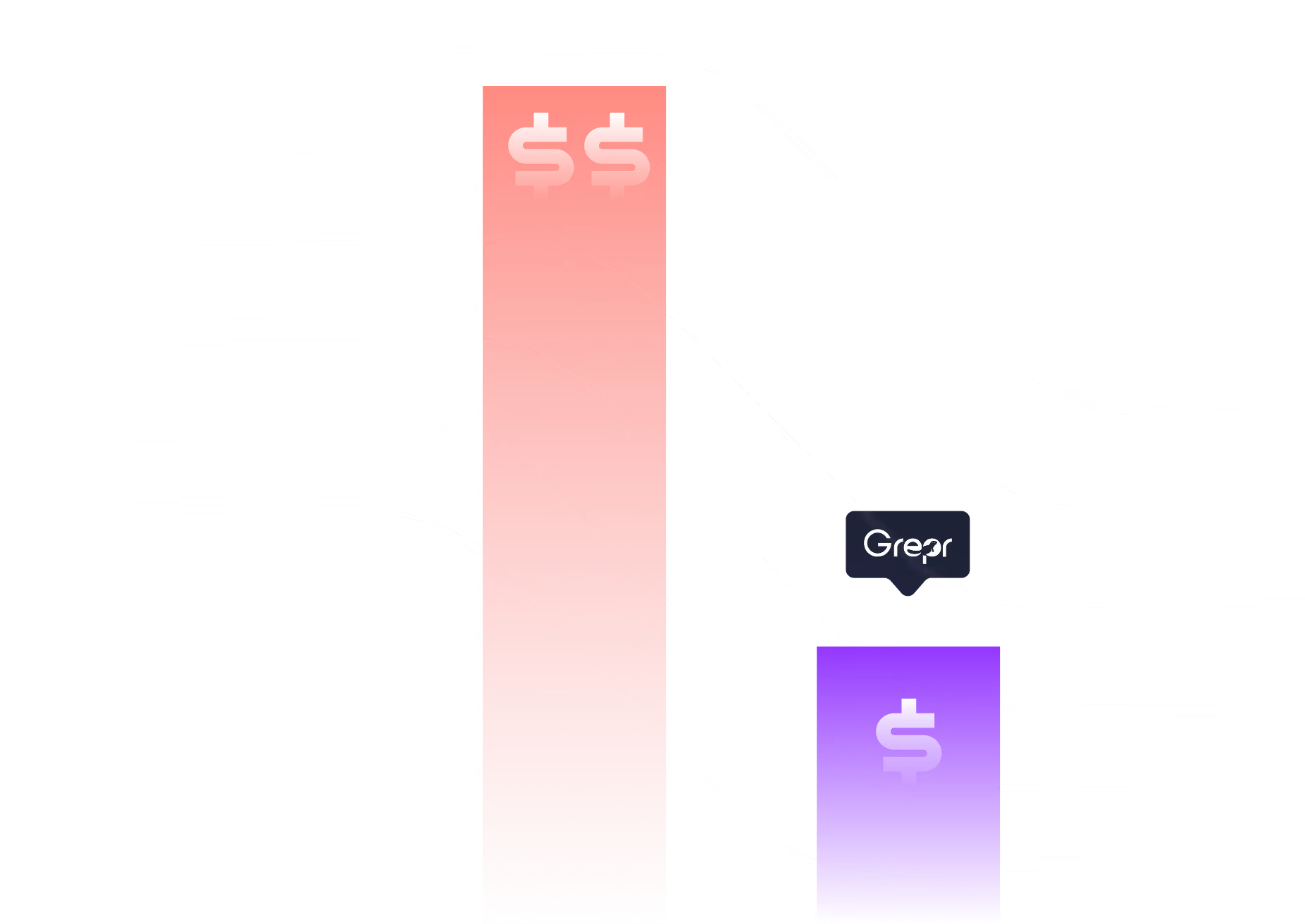
Observability costs are unsustainable and don't scale in the AI era
More services, more releases, and AI-assisted development all create more telemetry. 90% of it is just noise, but you’re paying to store all of it.
Grepr changes the economics by automatically eliminating the noise and reducing your observability TCO by 75%.
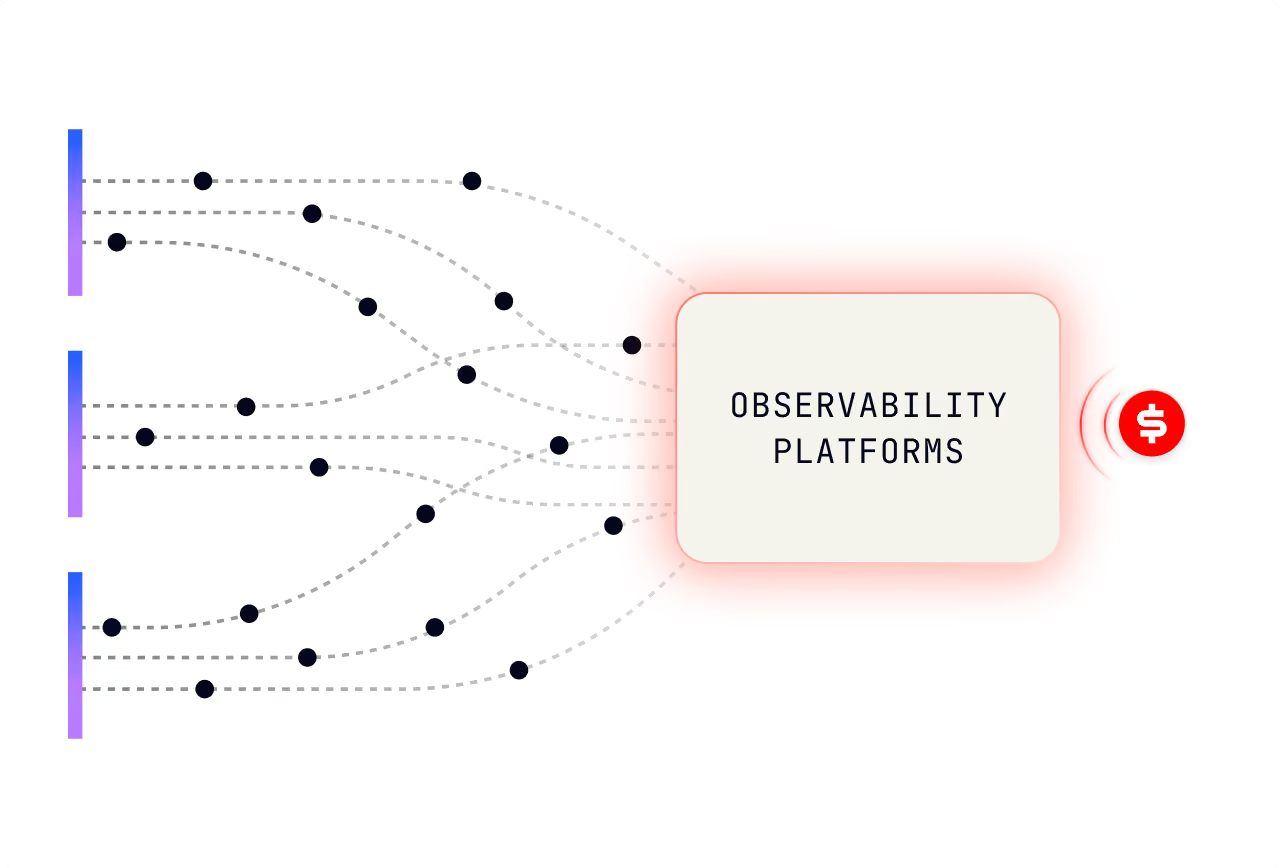
Expensive bills force you to drop data
Teams build toilsome pipeline rules that drop data --> incident response is slowed, driving up MTTR
Cut observability costs without losing visibility
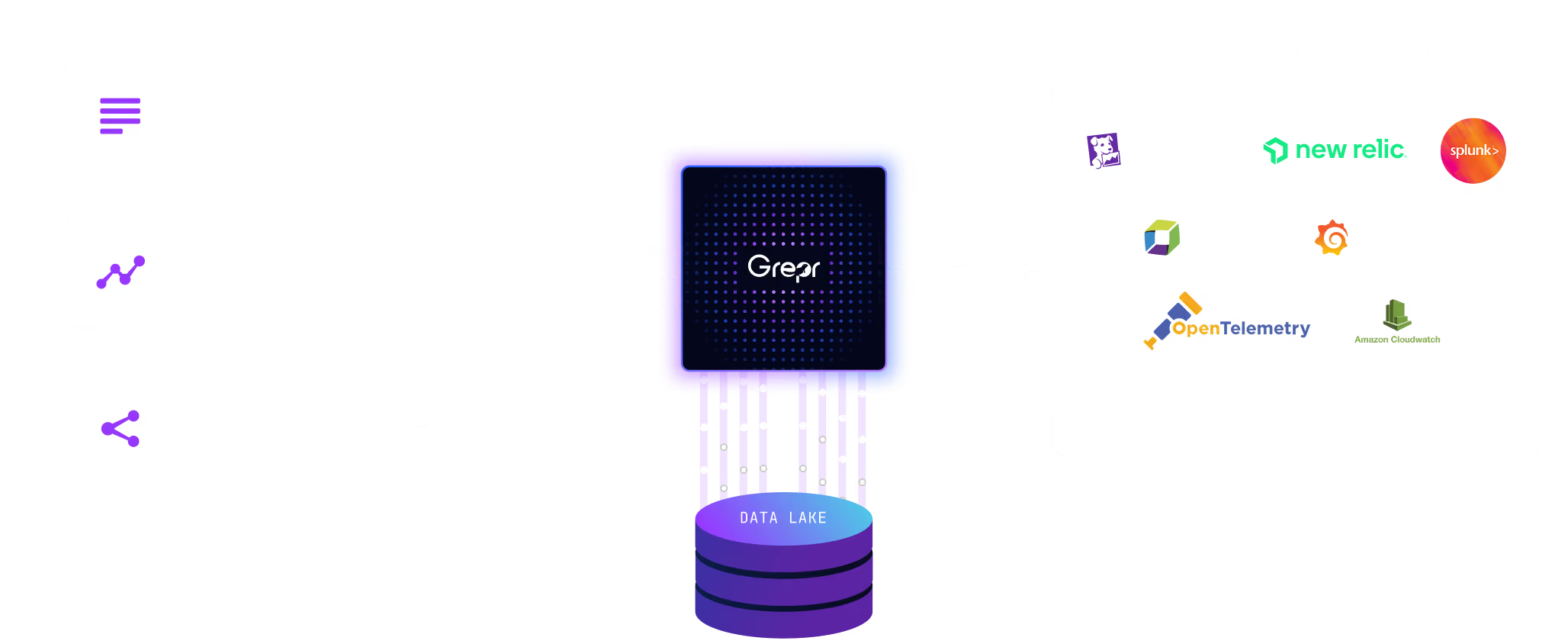
Grepr’s Autonomous Telemetry Pipeline automatically reduces observability TCO by 75%, keeping raw data in low-cost storage, available for immediate backfill.
Spend less. Focus on the signal.
Collect everything. Pay only for signal.
Grepr’s signal processing engine forwards compressed signal to your existing observability tools.
Reduce observability spend without losing visibility
Grepr eliminates sending noisy telemetry to high-cost observability platforms.
Full fidelity when you need it
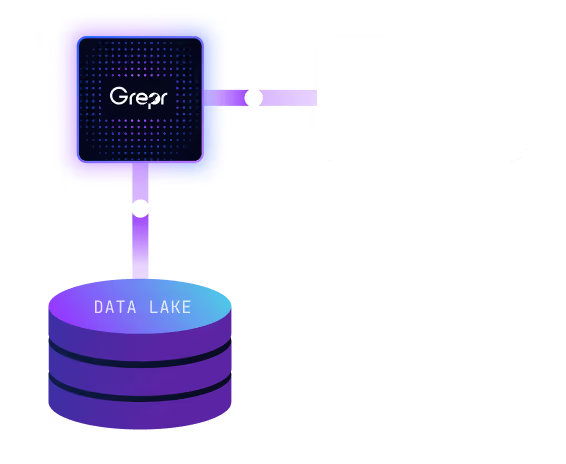
Raw telemetry remains queryable in low-cost storage for backfill and fine-granularity access when needed. Store it as long as you like in your own storage bucket.
Keep your current tooling. No migrations.
Grepr works seamlessly with Datadog, New Relic, Splunk, Grafana Cloud, CloudWatch, OpenTelemetry, and common collectors.
The Intelligent Operations layer for modern DevOps
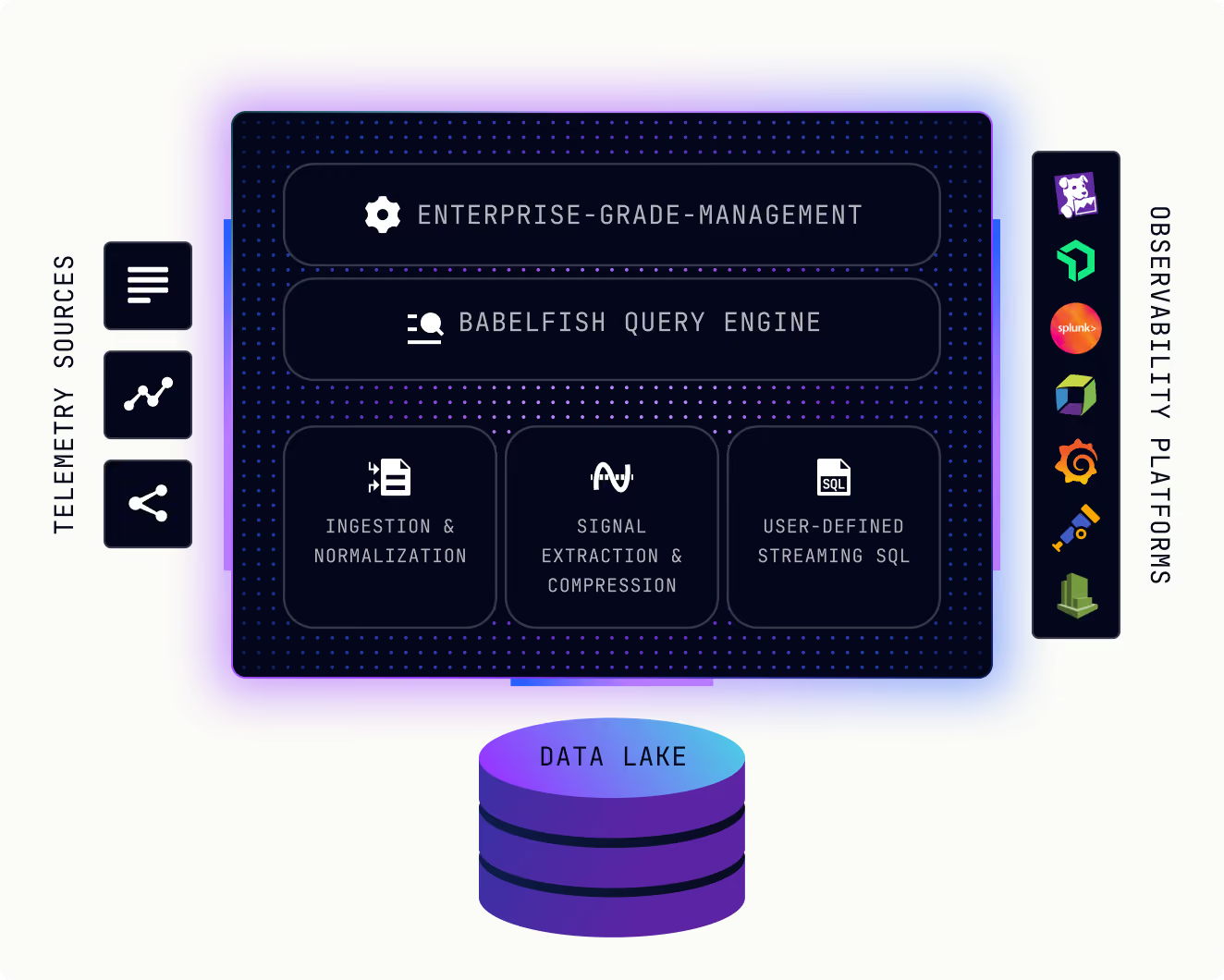
How Grepr solves the limitations of traditional approaches
Instead of collecting less
Creates blind spots, and developer adherence is inconsistent.
Collect as much as you want, and let Grepr separate the signal from the noise.
Instead of shortening retention
Creates blind spots during outages, and compliance may mandate longer retention.
Keep raw telemetry in a low-cost data lake and back-fill data to assist investigations.
Instead of sampling or dropping data
Requires months of engineering resources, and arbitrary dropping leads to blind spots.
Collect everything, and let Grepr’s signal processing engine automatically separate signal from noise.
Instead of observability reviews
Observability cost reviews and quota negotiations slow down deployments.
Collect everything and ship now.
Eliminate observability noise in production

“We were skeptical that something could reduce our log volume that aggressively without us feeling it somewhere. The fact that our developers haven't noticed a change in how they work is the result we were hoping for.”


How CustomInk Cut Their CloudWatch Bill by 85% Without Impacting Dev or Ops

"Grepr helped us automate what to keep and what to skip, so we’re not paying to store or index noise. It lets us find the needle in the haystack without paying for the haystack!"


How Jitsu Cut Logging Costs by 90% While Managing Millions of Shipments Generating 400 Logs Each

"Since we deployed Grepr, we’re seeing a 95% reduction in log volume and didn’t have to change a thing in our app. I'd recommend Grepr to any team that's experiencing rising costs from an expensive logging platform!"
.webp)

Case Study: How FOSSA Reduced Their Logs by 95% Without Burdening Their Engineers

“Engineers didn't change how they work at all. Dashboards and alerts still worked as expected. We just stopped paying for 90% of our log volume that was never doing anything for us.”

9 Days from Kickoff to Production: How Envoy Cut Log Volume by 90%
“After seeing what Grepr did to reduce our logs noise, extending it to traces was an easy call. We were seeing the same pattern: a lot of volume, most of it not particularly useful, and a Datadog billing model that scaled with every new host we spun up.”

How Envoy Cut Log Volume by 90%
“We were skeptical that something could reduce our log volume that aggressively without us feeling it somewhere. The fact that our developers haven't noticed a change in how they work is the result we were hoping for.”
"Grepr helped us automate what to keep and what to skip, so we’re not paying to store or index noise. It lets us find the needle in the haystack without paying for the haystack!"
"Since we deployed Grepr, we’re seeing a 95% reduction in log volume and didn’t have to change a thing in our app. I'd recommend Grepr to any team that's experiencing rising costs from an expensive logging platform!"
“Engineers didn't change how they work at all. Dashboards and alerts still worked as expected. We just stopped paying for 90% of our log volume that was never doing anything for us.”
“After seeing what Grepr did to reduce our logs noise, extending it to traces was an easy call. We were seeing the same pattern: a lot of volume, most of it not particularly useful, and a Datadog billing model that scaled with every new host we spun up.”
.avif)


FAQ
Observability costs are the expenses associated with collecting, ingesting, indexing, storing, retaining, and analyzing telemetry data such as logs, metrics, traces, and events. These costs often grow as engineering teams add more services, generate more telemetry, and rely more heavily on observability platforms for reliability and incident response.
Observability costs rise when telemetry volume grows faster than teams can manage it. More applications, microservices, releases, logs, metrics, and traces can all increase paid ingest and storage. Costs also grow when teams send repetitive or low-signal telemetry into premium observability platforms even when that data rarely improves troubleshooting or reliability decisions.
Grepr reduces observability costs by up to 75% by eliminating low-value, noisy telemetry before it reaches expensive observability platforms. Grepr forwards high-value signal and summaries to your existing observability platforms while preserving the noisy, raw telemetry in low-cost storage for incidents, investigations, and historical context.
No. Grepr is designed to work with existing observability platforms such as Datadog, Splunk, New Relic, Grafana Cloud, CloudWatch, and OpenTelemetry-compatible tools. The goal is to make those tools more cost-effective by reducing noisy telemetry before it drives additional ingest, indexing, or storage costs.
Not with Grepr’s recommended approach. Grepr sends low-value, noisy observability data to a low-cost data lake, which can backfill your observability platform as-desired. This helps you lower costs without creating the same blind spots that can come from simply dropping data or sampling too aggressively.
Yes. Grepr can support teams using Datadog by reducing noisy telemetry before it reaches Datadog while preserving raw data for later access. See how Jitsu reduced Datadog log costs by 90% with Grepr.
Grepr is a strong fit for engineering, platform, and SRE teams that want a scalable and automated platform that eliminates low-value, noisy telemetry in order to reduce their observability TCO by up to 75% without needing to migrate from existing observability tooling
The safest way to reduce observability costs is to ensure low-value, noisy telemetry is accessible in a low-cost data lake, in case it’s needed during an incident. That means avoiding blunt approaches like dropping data permanently or forcing developers to log less.
Yes. Grepr can backfill raw telemetry automatically during an incident or as-needed during an investigation.
No. Grepr’s Automated Telemetry Pipeline can also eliminate noisy traces and metrics (coming summer 2026). Grepr is also a full-service telemetry pipeline: Its unique, stateful streaming SQL engine goes beyond simple transformations and handles complex, real-time joins to enrich data in ways other pipelines can’t.
Ready to reduce your observability TCO by 75%?
Reduce telemetry noise in your observability tools. Instantly search or backfill raw data.