Engineering Guides
Centralized Log Management: What It Is and When You Need It


Most teams centralize their logs after the same kind of moment.
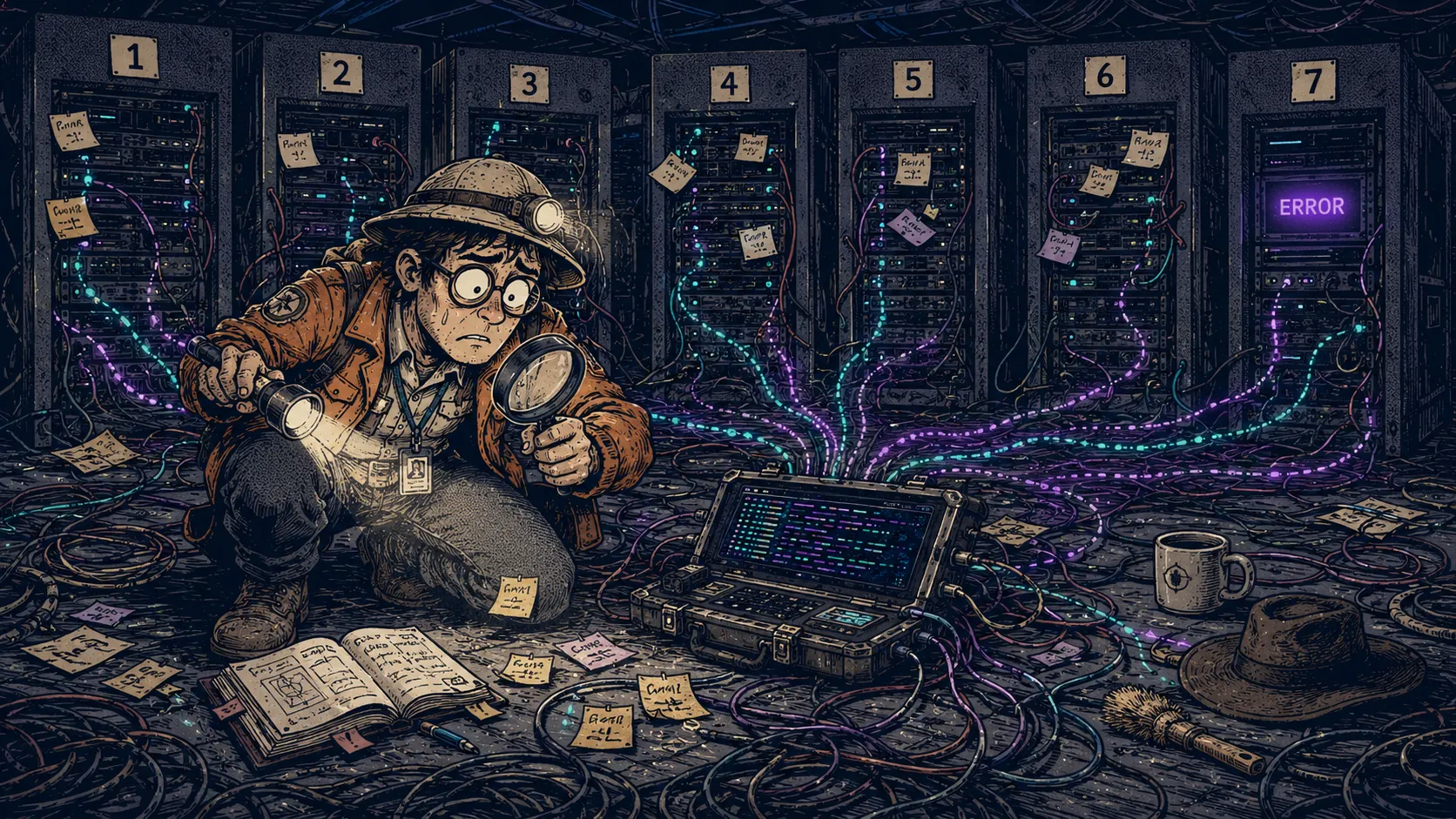
Someone spends forty-five minutes SSHing into six different machines during an outage, comes up empty, then discovers that the real error was sitting in a seventh machine that got skipped.
That seventh machine is the origin story. Somewhere behind every centralized log management rollout sits a version of it.
The idea seems obvious after that: bring every log into one place so engineers can search one system instead of conducting a small archaeological expedition across their infrastructure.
The difficult part begins later.
Collecting everything is useful. Indexing everything in the most expensive storage tier is not. Yet many teams treat those as the same decision and discover the difference only when the invoice arrives.
This guide explains what centralized log management is, when a team genuinely needs it, how the architecture works and how to centralize logs without turning the observability bill into another production incident.
Centralized log management is the practice of collecting logs from servers, applications, containers, databases, network devices and cloud services and making them accessible through one operational system.
Instead of examining separate files on individual machines, engineers can search, correlate and analyze events across the entire environment.
This helps teams:
The central system does not necessarily have to be one physical database. A modern architecture may keep recent, high-value events in a searchable observability platform while retaining the full raw stream in lower-cost object storage.
What matters is that the data remains governed, searchable and retrievable through a consistent process.
These terms are often used interchangeably, but they describe different parts of the job.
Centralized logging is the mechanical layer. It collects events from distributed systems and transports them to a central destination.
Centralized log management is the larger operational layer. It determines how those events are parsed, enriched, routed, indexed, protected, retained, searched and eventually archived or deleted.
A team can successfully centralize its logs and still have a management problem.
Everything may arrive in one place, but nobody has decided:
Centralized logging gets the data into the building. The management strategy decides what happens after it enters.
Logs generally arrive as structured or unstructured data.
Unstructured logs are free-form text. They are often easy for a person to read but harder for a machine to parse consistently.
Structured logs use predictable fields, commonly expressed as key-value pairs in JSON. A structured event might contain a timestamp, severity, service name, request ID, user ID and message in separate fields.
This makes filtering, correlation and analysis more reliable.
A human may appreciate a beautifully written log sentence. A machine would prefer that it stopped being beautiful and acquired some fields.
Centralization can work with both formats. However, if five services emit five different formats, the formatting problem does not disappear. It simply waits somewhere in the pipeline.
Teams should decide where logs will be parsed and normalized before large volumes begin arriving.
The decision has less to do with company size than most guides suggest.
A ten-person company running several distributed services may need centralized log management sooner than a much larger company operating one stable application.
The practical signals are easier to recognize.
SSHing into one machine once is troubleshooting. Repeating the same search across six machines for every incident is a process problem wearing a technology costume.
As microservices, containers and managed cloud services accumulate, a single user request may pass through several systems. Scattered logs make it difficult to rebuild that journey under incident pressure.
If the team repeatedly struggles to determine what happened first, where the failure began or which service passed the problem downstream, log centralization is already applying for the job in writing.
Standards and frameworks such as PCI DSS, HIPAA and SOC 2 may require organizations to retain, protect and produce relevant audit records, depending on their systems and applicable controls.
If “Can you prove that?” leads to several hours of manual searching, the risk is already present.
A page should begin an investigation, not a scavenger hunt for the correct dashboard.
If onboarding to the logging setup takes longer than understanding the application, knowledge has become trapped in individual people and undocumented file paths.
Two or more of these signals usually mean the need has already arrived.
A small, stable environment with one or two services may reasonably wait. Centralizing too early creates infrastructure and process overhead without a clear operational benefit.
Centralizing too late means discovering the need during an outage at 2 a.m., when architecture decisions are rarely at their most elegant.
Remove the vendor diagrams and the architecture follows eight basic stages.
Agents and forwarders such as Fluent Bit, Fluentd, Vector or the OpenTelemetry Collector gather logs from applications and infrastructure.
Events move through a transport layer. Message brokers such as Apache Kafka can absorb traffic bursts and prevent a temporary downstream problem from losing data.
Raw messages are converted into consistent fields. Timestamps, service names, severity levels and identifiers need common formats before teams can reliably search across systems.
The pipeline may add information such as deployment version, environment, owner or geographic context. Sensitive data, credentials and personal information should be masked before reaching broadly accessible systems.
Different events may have different destinations. Security logs may feed a SIEM, operational events may go to an observability platform and the complete raw stream may be copied into object storage.
High-value events are indexed for fast searches. Less frequently accessed data can remain in lower-cost storage until it is needed.
Teams build dashboards, saved searches and alerts on top of the centralized data.
This is the stage that pays off during an incident, assuming someone built the dashboard before the incident instead of during it.
Each log category should have a retention period based on operational, security, legal and compliance needs.
Applying one retention window to every event is simple, but usually expensive or inadequate.
A well-designed system provides four major benefits.
Engineers can trace events across systems without visiting individual machines. This reduces the time spent gathering evidence before the actual investigation begins.
Consistent timestamps and identifiers help teams follow one request, deployment or security event across multiple services.
Centralized access controls can protect sensitive logs, record who queried them and prevent teams from viewing data outside their responsibilities.
Permissions usually begin as a checkbox and end as a committee. Planning them early is cheaper.
Central retention makes it easier to preserve and produce records required for investigations or applicable controls.
This is the part many guides mention briefly, usually because the vendors writing them would prefer the details to surface after the contract is signed.
Centralizing logs and indexing every event in a premium platform are separate decisions.
Observability platforms may charge through combinations of ingestion, indexing, retention, workload and query usage. Self-hosted platforms replace some vendor costs with infrastructure, maintenance and engineering time.
Neither approach makes repetitive data free.
A security-relevant authentication failure and the four-hundredth identical health-check event of the hour do not carry the same operational value. Yet a naive setup may index both in the same expensive tier.
Every log is important until the invoice arrives. Then entire teams develop editorial standards overnight.
A more sustainable architecture separates logs according to how they will be used.
Recent errors, anomalies, security events and operationally important patterns should remain in the tools engineers already use.
Raw events can be archived in Amazon S3 or equivalent object storage, where long-term retention generally costs far less than premium indexing.
A log data lake separates storage from expensive always-on indexing while keeping historical data available.
When an investigation needs the original events for a particular service, host or time window, those logs can be queried or backfilled into the observability platform.
Filtering logs manually can reduce volume, but static rules require maintenance and can accidentally remove useful data as applications change.
The more useful question is not, “Which logs can we delete?”
It is:
Which events deserve immediate premium indexing, and which only need to remain safely retrievable?
Cost is not the only risk.
When every team depends on one central cluster, a traffic spike or indexing problem can affect investigations across the organization.
A wide search from one team can consume resources and slow queries for everyone else.
Once logs from multiple teams share one system, permissions become a governance problem. Centralization should not make every team’s data visible to every other team.
Logs frequently contain user identifiers, tokens, URLs and business data. Redaction must happen before broadly accessible indexing, not after someone discovers the field in a dashboard.
Centralization solves the problem of not knowing where the logs are. Done badly, it creates the more expensive problem of knowing exactly where too many logs are.
Before implementing the system, answer these questions:
The tools should come after these decisions, not before them.
Grepr sits upstream of existing platforms such as Datadog, Splunk, New Relic and Grafana Cloud.
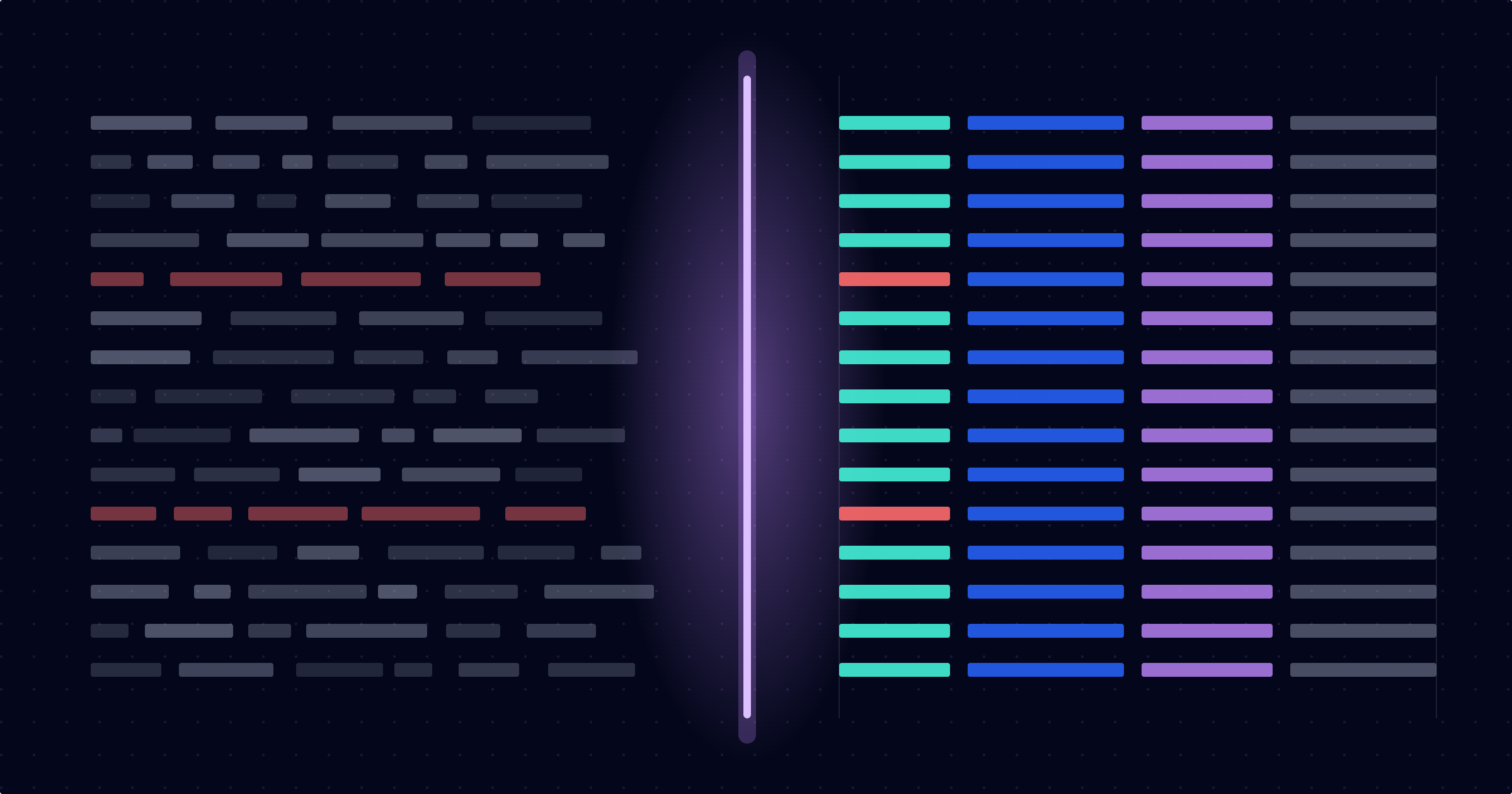
Its log-reduction engine identifies recurring patterns as events pass through the pipeline. Unusual events continue to the observability platform unchanged. Repetitive patterns can be summarized rather than indexed thousands of times.
The complete raw stream remains available in low-cost storage. When an incident, audit or investigation requires the original events, Grepr can search or backfill them into the existing platform.
This allows teams to reduce indexed volume without replacing their observability tools, rebuilding dashboards or asking developers to log less.
Results depend on how much repetitive data an environment produces. In one example, Jitsu reduced its Datadog logging costs by 90% while retaining the raw data required for its compliance needs.
The team kept its existing dashboards and workflows. It changed what reached the expensive index, not how engineers investigated incidents.
Centralized log management works best when everything remains findable, but every expensive byte has to earn its place on the bill.
See the noise-to-signal split in your own logs before changing application code or starting a migration.
Centralized log management collects logs from distributed applications and infrastructure and makes them searchable through one operational system. It also governs parsing, access, alerting, retention, archival and retrieval across the complete log lifecycle.
Centralized logging transports events from multiple sources into a central destination. Log management determines how those events are processed, protected, indexed, searched, retained and eventually archived or deleted.
Centralization becomes useful when incidents require searching multiple machines, service relationships are difficult to follow, audit records take too long to produce or engineers struggle to correlate events across systems.
The number of services and operational complexity matter more than company headcount.
No. A small team running distributed applications may need it sooner than a large company operating one stable system. The decision should be based on incident-response friction, system complexity, security and audit requirements.
Teams can reserve premium indexing for recent, high-value signals while retaining the complete raw stream in lower-cost object storage. Repetitive patterns can also be summarized before they reach the downstream platform.
Yes. Logs stored in S3 or another object store can be queried through a data-lake architecture or selectively backfilled into an existing observability platform when an investigation requires them.