Comparisons
Sawmills vs Grepr: Telemetry Pipeline Comparison for SREs
.webp)


Organisations are drowning in observability data. As applications become more complex the volume of metrics, logs and traces has risen exponentially, dramatically increasing the observability platform cost. There is not only the financial penalty, the immense amount of data indexed by observability platforms makes the task of finding the signal in all the noise a gruelling task. Organisations are now looking at ways to optimise the observability data to reduce the quantity indexed to contain the cost and decrease the toil of finding the signal.
In response to the challenge of controlling observability data volumes, the concept of Telemetry Pipelines has recently come to the market. Gartner has recently recognised this new segment and named Grepr as a Cool Vendor in this space. Another new player in this segment is Sawmills who came out of stealth in February 2025. There is some similarity between Grepr and Sawmills in that they operate in the same market segment and use AI to optimise telemetry data through a pipeline. However, there are significant differences in how AI is used and their overall capabilities.
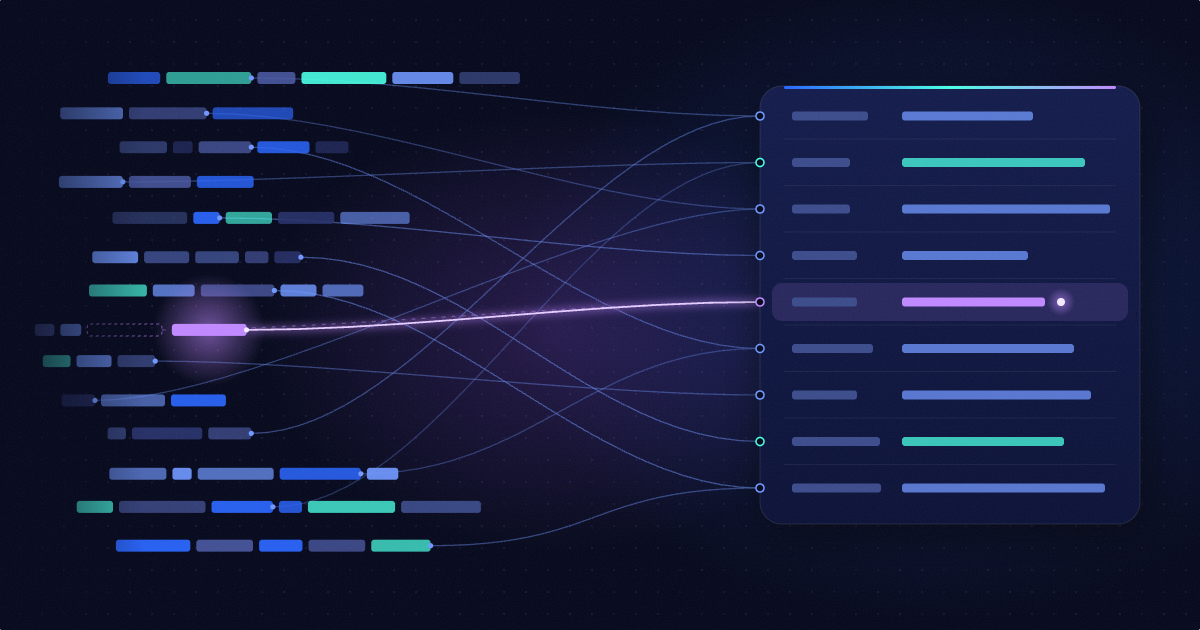
Telemetry Pipelines insert in between the log shippers or observability agents and the observability platforms. They process observability data in real time optimising and routing it.
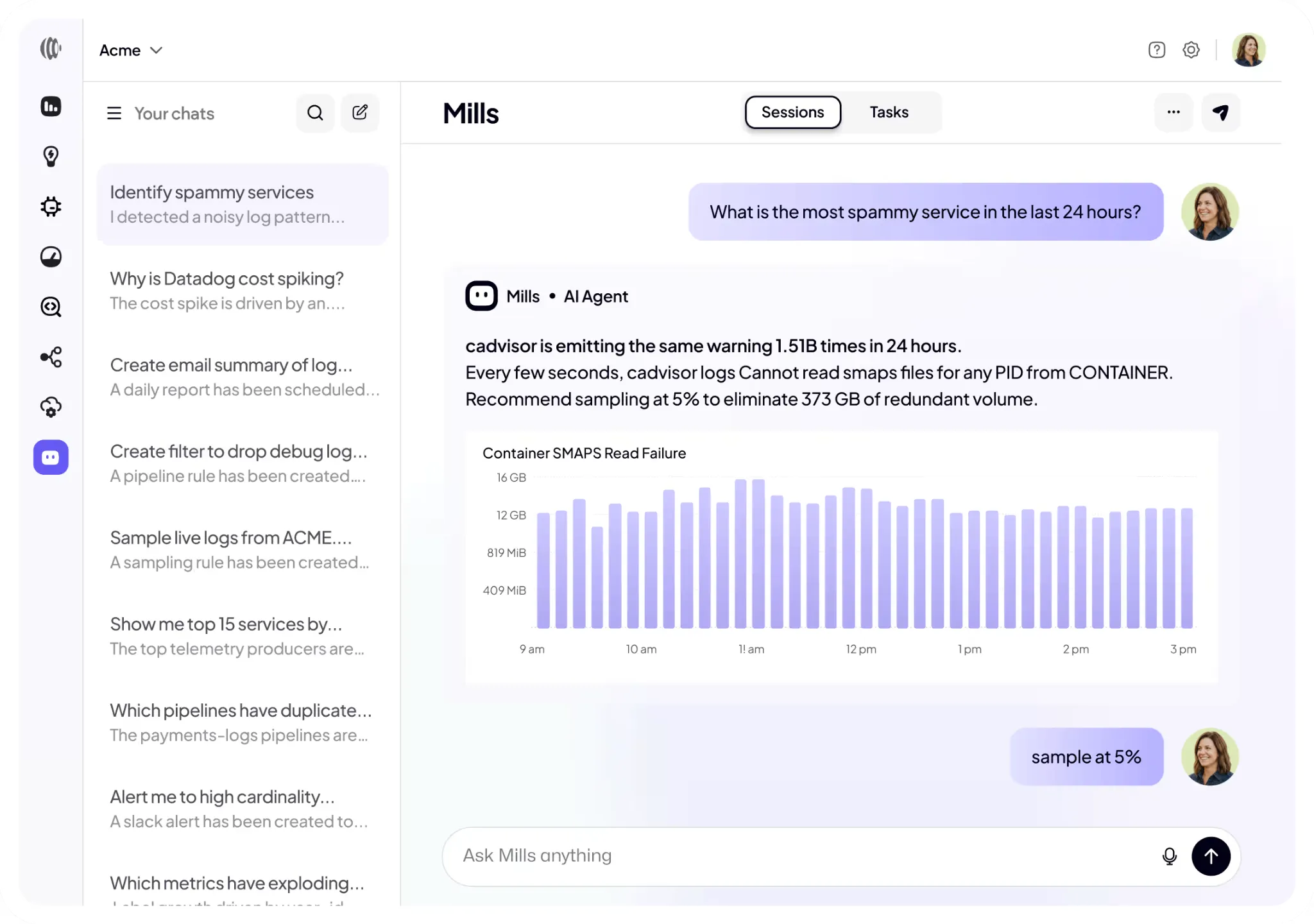
Sawmills is built on the Open Telemetry collector with pipeline rule configuration performed via the web dashboard. Sawmills uses its AI to analyse logs and metrics as they flow through the pipeline and suggest processing rules that could be applied to optimise data e.g. dropping, sampling, deduplication. An engineer is required to review the suggestions and decide whether to implement them or not. Engineers can add their own processing rules without requiring AI suggestions. The active rule set will require periodic reviews to ensure that they are still aligned with application changes. The Open Telemetry collector supports writing telemetry data to S3 commodity storage as unindexed flat files. It is up to the engineering team to figure out how to index and query these files, this capability is not part of the Sawmills product. Sawmills can be used to optimise logs and metrics with traces to be supported in a future release.
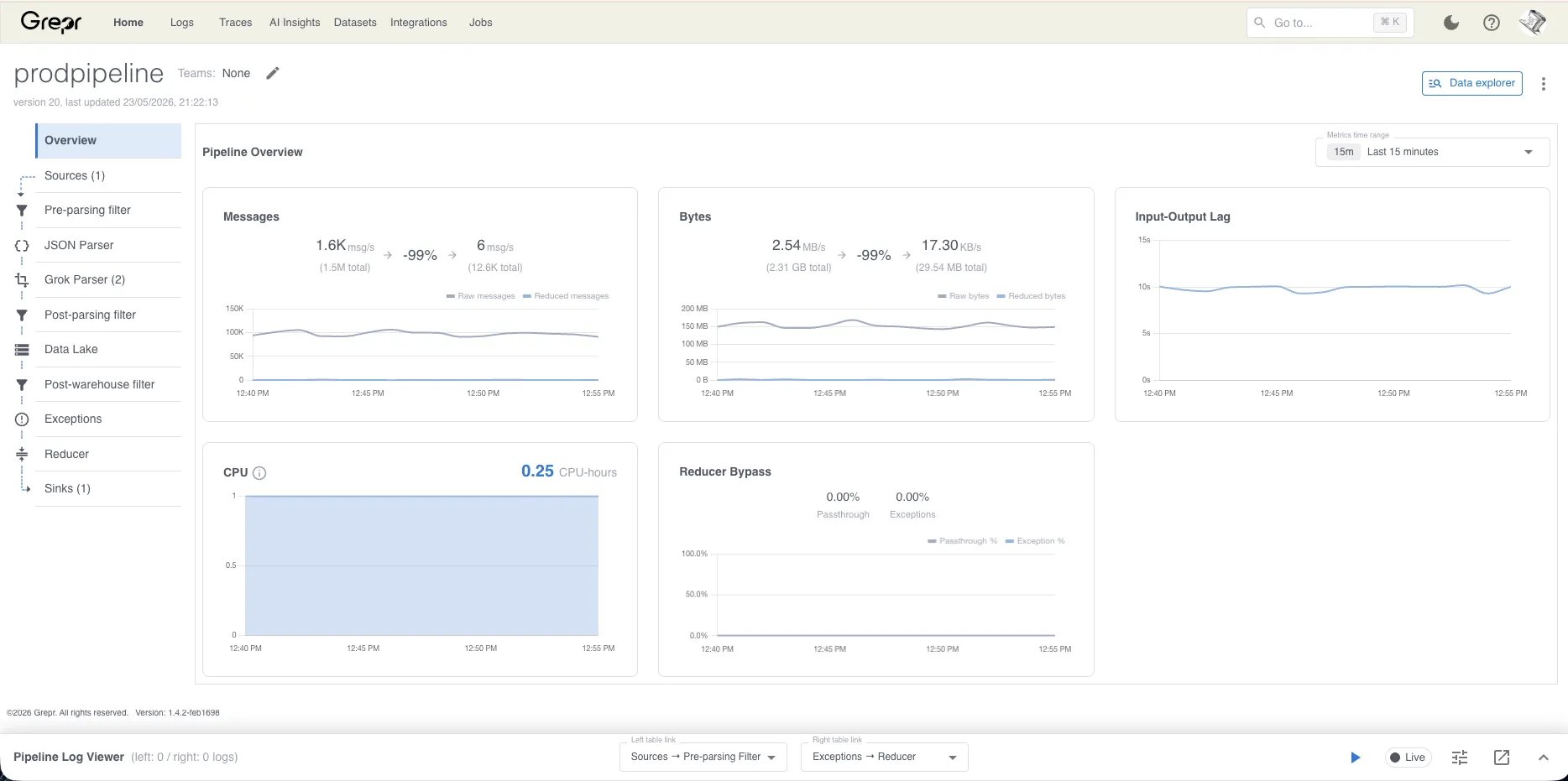
Grepr has built its own pipeline engine rather than building on top of existing open source projects such as OTel collector or DD Vector. Grepr can be used to optimise logs and traces with metrics to be supported in a future release. When processing logs Grepr uses machine learning to continually identify similar patterns in the log messages. For each identified pattern in the sample period, four messages are passed through then a count is started. At the end of the sample period a summary message is sent including the count. The result is that verbose messages are heavily optimised while rare messages, such as errors, are passed straight through. There is tight integration with common observability platforms such that log messages that are used for metric generation and/or alert rules are skipped to ensure complete fidelity.
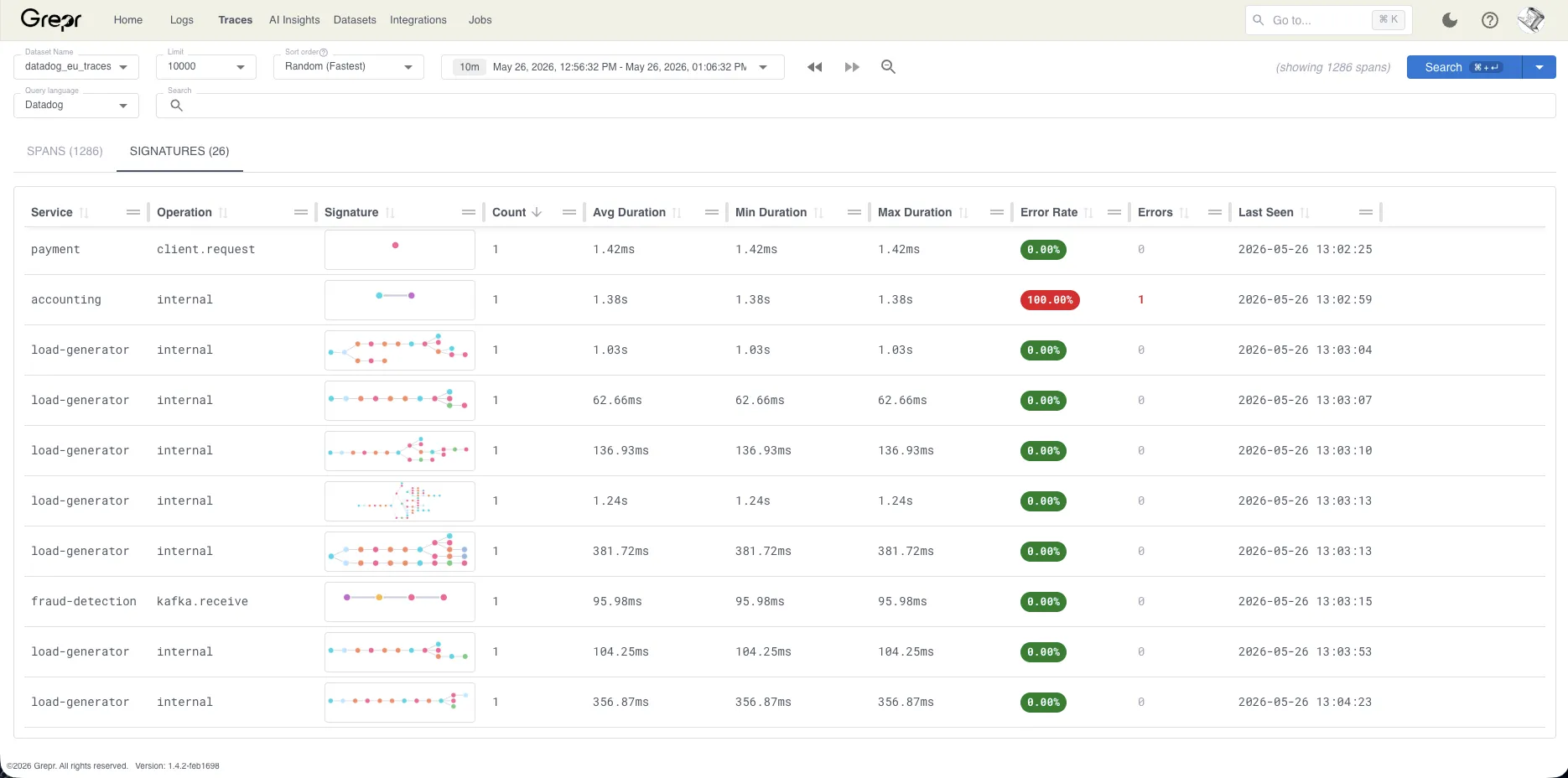
When processing trace data, all spans for a trace are buffered and the topology of the trace is fingerprinted. For each trace fingerprint a response time baseline is calculated. Tail based trace sampling is then possible, for example: 100% error, 75% very slow, 50% slow, 1% default. Because the entire trace is assembled, when a trace is sampled and passed through to the observability platform it will always be a complete trace. It is also possible to configure Grepr to ensure that all logs from a sampled trace are also passed through irrespective of log optimisation. All data sent through a Grepr pipeline is retained in low cost commodity S3 storage in an open indexed and queryable format. Grepr provides automatic backfill of sampled observability data triggered either automatically or manually.
For teams that want observability cost control without overhauling existing workflows, Grepr delivers results from day one. There's no complex installation, no manual pipeline maintenance, and no second dashboard competing for your engineers' attention.
Your existing agents, dashboards, and alerting rules stay exactly where they are. Grepr works alongside them, automatically optimizing data volume while retaining everything in low-cost storage for when you need it.
Schedule a demo to see how Grepr's Intelligent Observability Data Engine can reduce your observability costs by 90% or more, with zero disruption to your current workflows.