Events
What We Heard at Observability Summit 2026



As we walked the floor at Observability Summit in Minneapolis, we heard the same challenges in nearly every hallway conversation: Teams are generating far more telemetry than they can afford to keep. And AI-assisted development is accelerating the problem. At the same time, budget constraints are forcing teams to filter, sample, and drop data, causing engineering toil and creating risk for when things break.
The question we heard most was how to cut the bill without losing the data you reach for during an incident. Teams running Datadog or Grafana told versions of the same story: Log volume climbs every quarter and finance has noticed. Nobody wants to be the engineer who dropped the data that turned out to matter during an incident.
One conversation that stuck with us came from an engineer at a large pharma company whose Datadog bill had grown so fast that the team had started splitting observability data across multiple vendors just to manage cost. The tooling sprawl created its own problems, fragmented visibility, more context-switching, more to maintain. What they actually wanted was to stay on Datadog and bring the bill down.
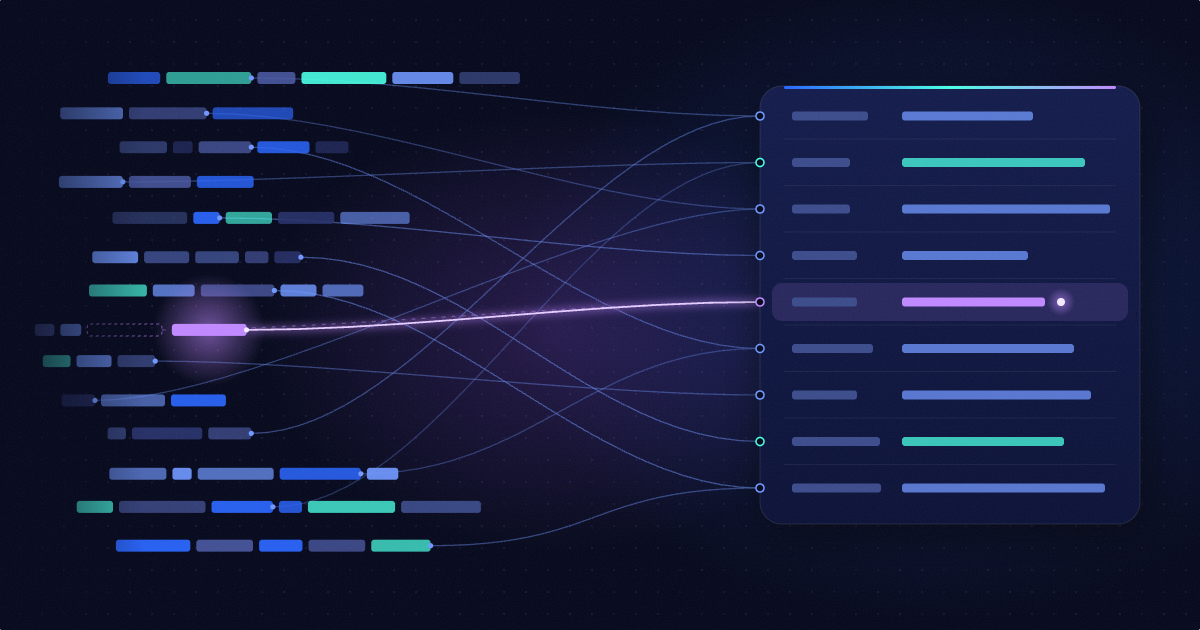
That's exactly the problem Grepr is built for. Jitsu cut its Datadog log cost by 90%. FOSSA went further with a 95% log reduction, live in under one hour, which is the number that made a couple of people at the booth ask us to repeat it. Grepr sits between your telemetry sources and the observability tools you already use, eliminating up to 90% of noise and cutting observability TCO by 75%... no rules to write, no dashboard impacts, no tool migrations. Raw data is preserved in low-cost storage for backfill and fine-granularity access when you need it, so nothing gets lost.
One theme was impossible to ignore: the explosion of teams building SRE agents to help engineers respond faster when systems go down. Automating incident triage, root cause analysis, and remediation is no longer a future-state conversation–teams are building it now. But there's a problem most are not addressing yet: these agents are being fed the same noisy telemetry streams that already overwhelm human engineers. An AI agent drowning in irrelevant logs and redundant metrics is just a more expensive way to find the same needle in the same haystack.
We saw this play out in real time. An engineer from one of the largest digital personal finance companies told us their org is moving so fast on AI development that observability costs haven't registered as a problem yet, but the bill is already climbing. Their focus wasn't on what they're spending today. It was on getting ahead of what AI-generated telemetry is about to do to their data volumes. The teams that instrument AI pipelines without a telemetry strategy in place are going to feel it.
Grepr helps by filtering out the noise and ensuring SRE agents have access to the relevant, novel signals most often associated with performance issues. The smartest SRE agent is only as good as the data it runs on. And speed compounds: filtering 90% of the noise doesn't just reduce cost. It makes every downstream system, human or AI, faster to act.
Thanks to everyone who stopped by table 12. If the summit left you thinking about your own telemetry strategy, we'd like to keep the conversation going: book a 20-minute call or try our free tier, both available at grepr.ai, and see what 90% noise reduction looks like on your own data.